
There is a well-worn trope in Australian public discourse that country people shouldn’t complain too loudly about inadequate services and crumbling infrastructure, because after all, we chose to live here.
I reject that.
That is just governmental laziness dressed up as common sense to excuse their failures. The idea that geography forfeits your right to a functional society is one we would never accept if applied to any other group of Australians.
For decades the assumed hierarchy imposed by this trope has been simple: cities first, country last. Two tiers.
And nobody in power seems to think that’s a problem worth fixing.
The most obvious reason is structural. There are no regional voices in the rooms where decisions are made. This is why I strongly support decentralising government departments. If the public servants designing our health systems, our transport networks, and our roads actually lived in the communities they were designing for, the standards they tolerated would change overnight.
Nobody aims for “acceptable” when they’re the ones accepting it.
This is supposed to be the entire rationale for the National Party. A guaranteed seat at the table for rural and regional Australia, a voice in the room. That argument has been comprehensively destroyed thanks to Queensland stupid, where the merger with the Liberals produced the LNP. We are now watching the federal consequences play out, with LNP figures leading the Nationals in Canberra and failing, consistently and visibly, to advocate for the communities the real National Party was built to serve.
Current leader Matt Canavan is not even a rural person – he grew up in Logan, attended city schools, university in Brisbane, and then moved to Canberra to be a professional political operative. Sure, he technically lives in Yeppoon now – on the coast, of course – but he has no business calling himself a National let alone leading the party. He certainly doesn’t get the realities of rural life and remains obsessed with mimicking Hanson’s white trash narrative (you can take the boy out of Logan, but you can’t take the Logan out of the boy…).
The silencing of regional voices in the current NSW Government is also very obvious. Take for example the process of Labor assigning upper house MPs as “duty MLCs” for electorates held by the opposition. The Liberals do something similar, but Labor does it with a particular tin ear.
The duty MLC for the Northern Tablelands is a guy named Peter Primrose. He is based in Western Sydney, former member of the Campbelltown City Council. He has, as far as I can determine, no connection to this region whatsoever. He has been assigned to speak for a community he has presumably never needed to live in, work in, or rely on for healthcare, transport, or anything else.
This is not representation. It is rostering.
What makes it worse is that Labor has genuine talent right here in the New England. People like Gunnedah Deputy Mayor Kate McGrath, former federal candidate Laura Hughes, Denise McHugh, Caroline Chapman and many more would all be outstanding upper house representatives. They know this region. They live this region. They’re capable and intelligent and informed.
But appointing any of them would require Labor to actually care about country areas. They would have to choose to appoint a strong country woman to parliament rather than yet another old white man from Western Sydney.
Y’know, they’d have to show us some respect.
There is no evidence they are prepared to do that. Certainly not for us silly people that chose to live inland.
Lately, something has shifted, and those of us in inland communities are watching more and more of what we have be ripped away in real time, while the “country” experience is largely being erased from the debate, replaced exclusively with the experience on regional centres on the coast.
Coastal regional areas are noatbly being treated as a more favoured category. If city people are first class and country people have always been second class, then this latest shift seems to be redefining country to “regional” by which they mean “civilised places on the coast”, and inland communities are being quietly pushed to third class citizens in the land that they all doing their best to forget about entirely.
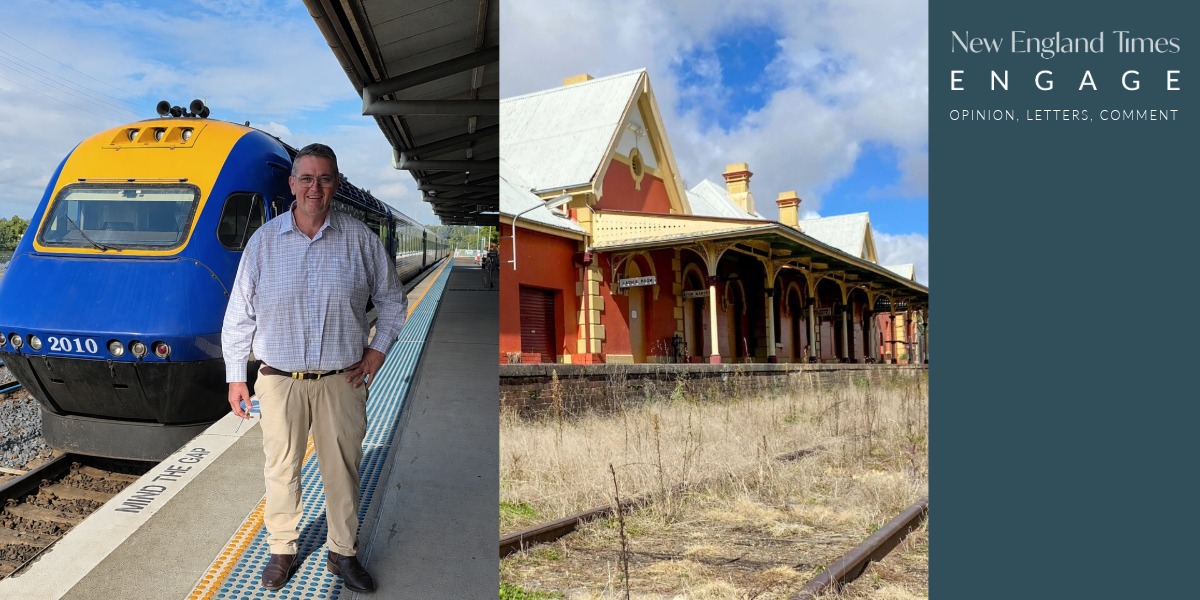
The coastal/inland split in political attention and lived reality shows up in lots of places and on all sides of the political divide. Take for example Nationals Member for Clarence Richie Williamson’s story on North Coast Times today complaining that the XPT arrives in Brisbane at 4.52 in the morning. Not good enough, he said.
I understand his frustration.
But I speak for several thousand New Englanders when I say we would be grateful beyond words for a train to Brisbane at any hour at all.
The coast is complaining about the train timetable. We don’t have a train. These are not the same problem. They are miles apart in lived reality.
The same split is seen in the federal government’s rail investments and the surrounding debate.
Inland Rail, a project that would have connected inland communities to freight networks, reduced road wear, supported agricultural supply chains, and many more benefits besides – gone. Axed. Abandoned.
And what is the money going to instead? Billions into suburban rail upgrades for Sydney and Melbourne. Billions more being talked up for high speed rail and freight lines along the coast. Infrastructure for people who already have infrastructure. Upgrades for freight corridors that already function.
We saw the split when the fuel crisis hit, hitting inland regions hardest.
Big fuel companies prioritised their city and coastal service stations, while inland bowsers ran dry. It took weeks of screaming before federal government leaders would even acknowledge the problem – and for city based media to stop spreading their misinformation that it was just a hoarding problem – let alone do something about it.
Healthcare tells the same story in harder numbers and bigger human costs.
Coastal parts of Hunter New England Health share many of our frustrations. Understaffing. Long waits. Deteriorating facilities. But while someone in a coastal community may wait weeks to see a doctor or have routine surgery, someone in an inland community waits months – or just goes without. Where a coastal patient may travel three hours to access a certain health service, an inland patient may have a round trip of three days.
That is not a gap. That is a chasm.
And it has consequences. People delay care. Conditions worsen. Preventable things become serious. Serious things become critical. The cost is measured not just in money but in lives, and we do not talk about it nearly enough.
Even just as a general level of care for community, there is a noticeable split.
For example, Tenterfield Shire is the one part of the New England which does have Labor representation, falling within the electorate of Lismore, represented by Janelle Saffin. Janelle is a capable advocate and her work for Lismore after the floods was commendable. But Tenterfield is not Lismore.
When a community meeting was held in Torrington following the deeply distressing home invasion last week, the member did not attend. She did apparently speak to the Mayor, and her office sent a representative. The representative identified herself as a volunteer in Saffin’s office. There was no media comment (and no response to our request for comment) from Saffin. There was not so much as a Facebook post acknowledging what the community had been through.
The Africa Day Celebration in Lismore got a Facebook Post apologising for not being able to make it though, I guess that’s important.
The good people of Torrington are too polite to say it as bluntly as I will, but the message to my ears was clear. You are not worth the trip.
The connectivity issue clearly raised at the Torrington meeting was another example of the new third class status we hold. There is no Optus service at all in Torrington, and the tiny Telstra tower – erected only after this issue was raised in the 2019 bushfires – doesn’t work the second you go over a hill. People can’t call 000, a reality that triggers parliamentary inquiries, inquests, investigations, fines and reforms when it happens for a few hours in the city.
Even along the New England Highway, which is supposed to be a National Highway, mobile service regularly drops out. This would never be tolerated on the Pacific Highway.
It goes on, and on, and on.
Country people have always been told to be grateful for what they get and quiet about what they don’t.
Now, inland country people are being told something even worse. We are not worthy of basic services, and we should be fine with actively losing the little that we have to give more to the cities and the coast.
No decent government should allow that, let alone be comfortable with it.
We shouldn’t be allowing it either.
End Rant.
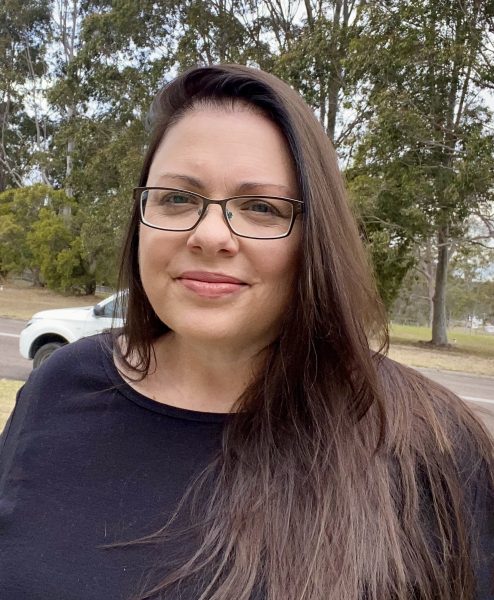
Dr RK (Kath) Crosby is the CEO of research and strategy company KORE CSR, former strategist for the Australian Democrats, and holds a PhD in political behaviour. She is also a well known migraine and health advocate, and the Publisher of New England Times and North Coast Times.
All opinion and comment on New England Times Engage is the opinion of the writer and not New England Times.
Got something on your mind? Go on then, engage. Submit your opinion piece, letter to the editor, or Quick Word now.