
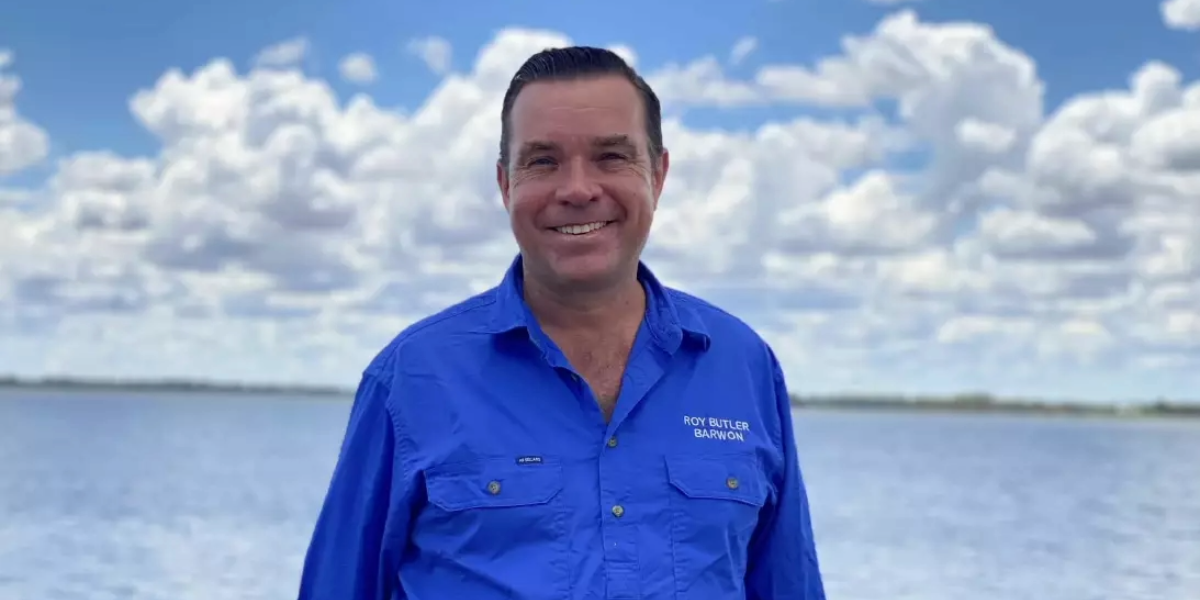
Roy’s Roundup 11 May 2026
G’day folks,
Last week I was back in Parliament after a couple of weeks mostly spent out on the road. Part of that driving time was for the Royal Flying Doctors torch relay from Sydney to Broken Hill.
This week is the second of two consecutive sitting weeks, with a range of bills up for debate, including one on renewables that will ensure benefits flow to communities affected by the energy projects but I will be working to ensure those benefits flow with the proper consultation and through the best channels.
Next week I will be heading back to Broken Hill, to meet with the UK Consul-General, for the official celebrations of the 90th anniversary of the RFDS establishing a base in Broken Hill.
It will be a busy time over the next couple of weeks.
Royal Flying Doctor relay
On April 29 I set out on a bit of an epic motorbike ride, starting from the Royal Flying Doctors base at Bankstown Airport and ending at their base in Broken Hill. Dubbed the Lighting the Way Relay, it was to celebrate 90 years of the RFDS in Broken Hill, to raise awareness of the work of the RFDS and to raise money for them to keep delivering their services to regional NSW.
Apart from towing a small billboard showing my support for the RFDS, which I encouraged people to sign with messages for the Flying Doctors. I was also carrying a flare, the kind that is normally used to light remote airstrips, which was decorated with special indigenous artwork.
I was followed by two of my staffers as a support crew, who were towing a trailer that was sometimes used to carry my trailer for safety when we had to travel faster.
In our convoy was also an RFDS vehicle towing a fuselage of an RFDS aircraft, which gives people an idea of what the interior of a Flying Doctors plane looks like.
On the first leg of the journey from Bankstown to the RFDS Visitor Centre in Dubbo, started to present problems. Vibrations were making some bolts rattle loose, which necessitated some on the road repairs, but we still made it to Dubbo on schedule.
The next day we headed to Warren, stopped at the Mulga Creek Hotel at Byrock to drop a coin in the parking meter they use to collect donation for the RFDS before heading on to Bourke.
In Bourke we received a nice warm welcome, and then moved on to Cobar, where an enthusiastic crowd of children enjoyed looking at the fuselage. Along the way many of the people who came to give their support recounted stories of their experiences of the RFDS. It is an organisation that touched, and saved, many lives out west.
On the way to Wilcannia the next day I stopped at Emmdale Roadhouse, which has an airstrip across the road, where Virginia has often set out emergency flares to guide in aircraft. At Wilcannia a group of students from St Therese’s Community School filed aboard the fuselage for a look.
We finally made it into Broken Hill, weary from some challenging moments during the ride, but life is not without its challenges, and the RFDS knows a thing or two about dealing with challenges, which we heard from the many stories people shared with us along the way.
It may surprise many people to know that despite being an essential part of the state’s medical system, the RFDS is heavily dependent on philanthropy, fundraising efforts and corporate partnerships. But I have been fighting to ensure they have ongoing government funding to keep doing what they do so well in parts of the state where government medical services can’t or don’t go. You can show your support by writing a letter to the Health Minister, or by going to my Facebook page and giving a heart (rather than just a thumbs up) to my post about ongoing funding for the RFDS.
If you want to make a donation go to https://se.doyourthing.org.au/fundraisers/roysroadtrip/roy–s-road-trip
Broken Hill Agfair
While I was in Broken Hill, I took the opportunity to go to Agfair, a biennial event that is one of the most significant agricultural shows in NSW.
Reports are that the number of people who went to the show this year was double those of the last show in 2024. Events like this are a great chance to showcase some of the latest advances in agricultural technology and techniques, they also bring the local community together, and people who live out on remote stations get to reunite with friends, colleagues and family. Locals also get to mix and mingle with people from around the country and it brings money into the local economy.
I caught up with Alison Stone, the NSW Agricultural Commissioner, at the show and we had a very interesting discussion on a range of topics.
It was a big day for Broken Hill, and I look forward to possibly making it to the next one in 2028.
Funding for community services during the fuel crisis
The fuel crisis has put a lot of pressure on everyone’s bottom line, but the crisis has had a particularly significant impact on non-government organisations and other service providers who operate non-profit services on behalf of the government.
Services like Live Better, Bre Outback Express, Namoi Care Connect are doing it tough having to cope with the increased cost of transport, but unlike organisations operating in the private sector they can’t increase fees or charge more for their services.
During the last sitting week, I directed a Question Without Notice to the Energy Minister, via his representative in the Legislative Assembly Minister for Emergency Services Jihad Dib, about whether the government was considering providing funding to supplement the fuel expenses of non-government and other service providers.
He said that “The Government is considering a range of options to manage this crisis. We are monitoring the situation closely to ensure that we provide practical measures to help people across the State.”
The minister mentioned several measures that the state and federal government had already taken to bring some price relief to all motorists but gave no specific commitment to funding community service providers.
To hear his full answer go to https://www.roybutler.com.au/video_clips
Regions being left behind
During the sitting week I delivered a Private Members Statement giving a warning to the government that they are facing a terrible storm.
But this was no weather report, it was a warning about the storm being generated by poor government policy and bad decisions in regional areas.
The regions already have higher levels of disadvantage and lower investment, but the government’s reductions in funding, the stalled projects, the lack of consultation, all compound the existing problems and it looks like the government has no respect for country people, businesses and organisations and no high regard for their needs.
In my statement I detailed some of the major ways that the government has disrespected and ignored regional areas, including the axing of the Resources for Regions Fund, which was meant to address the impacts of mining in communities affected by mining. It was replaced by a more generic $400 million Regional Development Trust Fund and a $250 million Working Regions Fund, which force mining affected communities to compete for a broad pool of funds. The new funds also lack transparency and consistency.
People are not sure when the next round of the Regional Development Trust Fund will be and the Working Regions Fund has no application process and despite assurances by the minister that funds have been allocated no one seems to know where they have been spent.
Safe and Secure Water program has also been stalled, pending a review, denying grants to communities for basic services.
Grant applications for programs like Community Building Partnerships are generally becoming more complex.
As I have said regional people feel abandoned, disrespected, shortchanged and voices unheard by this government. The consequences will likely be felt at the ballot box next year.
To see the private members statement go to https://www.roybutler.com.au/video_clips
Notice of Motion on Firearms Legislation
I have been continuing to apply pressure on the government over its firearms legislation. I recently delivered a Notice of Motion calling on the house to:
(1) Note that the Government and Opposition supported unevidenced, knee jerk firearm laws in December 2025.
(2) Acknowledge that unintended consequences continue to pile up, other states and territories are rejecting the proposal, and now the funding from the Federal Government maybe in question.
(3) Agree that these laws that only punish the law abiding have nothing to do with public safety.
(4) Note that almost six months after the passage of legislation nothing has happened and law-abiding people continue to be scapegoated for agency failure.
The legislation is another example of regional areas not being heard by the government and I will continue to remind them that the legislation was ill-conceived and will not do anything to stop terrorist attacks. Instead, the consequences will be widely felt by law abiding people and by the government at the ballot box.
Civics – Voting Preferences
For many people the voting system we use at state and federal level is a bit of a mystery.
One particularly confusing aspect of it all is preferences.
Preferences are the other numbers marked on a ballot form after a voter has marked the number “1” for their first preference, or the person they would most like to see in office.
Obviously, the number 2 is marked for the second person preferred by the voter and so on, until all the boxes are numbered. In some states and in the federal election it is compulsory to mark all the boxes with sequential numbers or the vote is informal and won’t be counted. In NSW we have optional preferential voting, so that as long as you put the number one on a ballot (beside the candidate you want to see as your representative) for the lower house that vote will still be valid.
When the ballots are counted the candidate with the least number of first preference votes is eliminated from the count and the second preferences marked on those ballots will then go to the other candidates until another last place candidate is eliminated. This continues until all preferences have been counted and redistributed to other candidates.
Given that candidates cannot control how a voter marks their ballot once they get into the booth, they cannot control where those preferences go. Constituents, and journalists, will often ask “who are you giving your preferences to?” but the reality is that you, the voter, hold the power to give the preferences. If you decide to mark a ballot strictly according to the way a candidate asks in their “How to Vote” cards then the candidate can be said to have distributed their preferences in a certain way, but there is nothing to a stop a voter from numbering the ballot how they like. Even when a party makes a “preference deal”, if the voters decide not to follow “how to vote” card directions, the deal is meaningless.
That is why it is important to make sure you direct the preferences the way you want to direct them.
Voting on the upper house ballot is slightly different. For one thing there is a line dividing the page into names of parties above and candidates below. Voters need to either mark at least 15 boxes below the line or at least one box above, but not both. Marking below gives more control over the candidates you elect.
But it is important to look carefully at who you are preferencing in both houses. As I said in a previous civics lesson, it is better to elect an upper house candidate who can work with your lower house representative, to make them both more effective and to make your vote more effective.
Facts:
- One of the first people to develop the idea of preferential voting was Charles Dodgson, better known as Lewis Carroll, a mathematician and author of the Alice in Wonderland books. Dodgson reasoned that a person being elected based on the highest number of votes, out of a field of more than two candidates, could win with far less than 50 percent support from the voters. So he devised a system that would allow people to show other preferences, so that their vote would still count.
- Australia was the first nation in the world to introduce preferential voting. It was first introduced in Queensland in 1892, followed by Tasmania in 1896. It was introduced to national elections in 1918.
- Preferential voting for the Legislative Assembly in NSW was first introduced in 1928; at the time it was compulsory to mark all the boxes. In 1980 it became optional to mark all the boxes, allowing people to put just a “1” in a single box.
All opinion and comment on New England Times Engage is the opinion of the writer and not New England Times.
Got something on your mind? Go on then, engage. Submit your opinion piece, letter to the editor, or Quick Word now.