
For as long as I can remember, Australia has supposedly been crying out for tax reform.
Business groups want it. Economists want it. Think tanks want it. Editorial writers want it. Every second commentator on television wants it.
The chorus is always the same: Australia needs bold leadership. Australia needs courageous reform. Australia needs politicians willing to make tough decisions.
Then, inevitably, someone proposes a reform.
Suddenly the same people who spent years demanding change begin predicting economic Armageddon.
The sky will fall. The economy will collapse. Investors will flee. Small business will be destroyed. The housing market will implode. Civilisation itself may not survive.
It is one of the great traditions of Australian public debate.
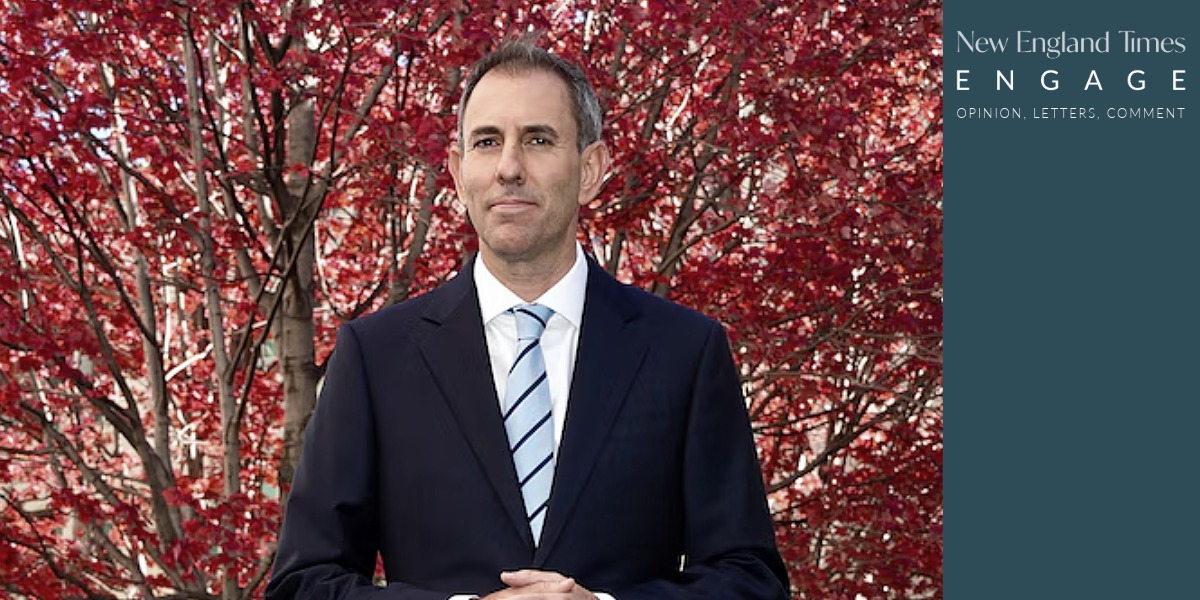
That is why the reaction to Treasurer Jim Chalmers’ proposed changes to capital gains tax concessions, negative gearing and discretionary trusts has been so predictable.
Before anyone has seen the long-term effects, before the reforms have even been implemented, sections of the media and vested interests are already treating them as an existential threat to the nation.
We’ve seen this movie before.
When Paul Keating floated the Australian dollar, critics forecast disaster. Instead, Australia modernised its economy and laid the foundations for decades of growth.
When the Hawke and Keating governments pursued major economic reform through the Accord and National Competition Policy, opponents warned of catastrophe. The catastrophe never arrived.
When John Howard and Peter Costello introduced the GST, many economists and commentators predicted inflationary chaos and devastation for small business. Australia somehow survived that too.
History tells us something important.
The loudest voices in reform debates are rarely those speaking for the public interest. They are often those whose existing advantages are being challenged. Those who benefit from the status quo invariably have the greatest incentive to defend it—and the resources to make sure their objections are heard.
The media’s role in all of this deserves scrutiny as well.
For years, editorial writers and economic commentators have lectured governments about the need for “courageous reform”. They have demanded bold leadership, lamented policy timidity and criticised politicians for kicking difficult decisions down the road.
Yet when reform finally arrives, many of the same voices suddenly discover reasons why this particular reform is reckless, dangerous or politically impossible.
The asymmetry can be striking.
In May, the Australian Financial Review splashed criticism of the government’s tax reforms across its front page under the headline “Rethink tax moves, tech chiefs urge”. Yet on the very same day it reported polling showing that all of the government’s major budget measures enjoyed net positive support from voters, including the controversial tax changes. That story was buried inside the paper with far less prominence.
The Sydney Morning Herald provided another example. Treasury analysis suggesting that nine out of ten Australians under 30 would be financially better off under the reforms was undoubtedly significant news given the fierce debate surrounding the package. Yet it was not treated with anything like the prominence given to stories predicting economic calamity.
Then there is the Daily Telegraph, which increasingly appears to have abandoned any pretence of being a newspaper of record and instead operates as an outrage megaphone for whichever culture war or political grievance happens to be generating clicks that week.
One day the target is bike lanes. The next it is Welcome to Country ceremonies. Then renewable energy, public servants, councils, universities, planning laws or tax reform. The details change, but the formula remains remarkably consistent: identify a source of public frustration, amplify it relentlessly and frame every issue as evidence that the country is on the brink of collapse.
The objective is not understanding. It is outrage.
A newspaper that once prided itself on breaking stories now seems just as interested in manufacturing them.
Bad news attracts attention. Conflict attracts clicks. Predictions of catastrophe generate audiences. A headline saying “Policy Change Produces Mostly Positive Outcomes” rarely sells newspapers.
The result is a public debate increasingly dominated by fear, grievance and hyperbole rather than evidence.
The modern outrage industry has become a strange alliance of vested interests, shock-jocks, culture-war commentators and opportunistic politicians, all united by a simple proposition: if enough people can be frightened, angered or confused, reform can be stopped before it begins.
Australians are told that any change to existing arrangements will destroy investment, crush confidence or trigger economic collapse. Yet history repeatedly demonstrates that most of these forecasts are wildly exaggerated.
The apocalypse rarely arrives.
The vested interests simply move on to defending the next concession.
That is certainly true when it comes to tax concessions.
The 50 per cent capital gains tax discount has always been difficult to justify. Negative gearing has distorted investment decisions for decades. Discretionary trusts have increasingly become vehicles for income splitting and tax minimisation that are unavailable to ordinary wage earners.
Meanwhile, teachers, nurses, retail workers, public servants, tradespeople and countless others pay tax through straightforward PAYG arrangements with few opportunities to restructure their affairs.
It is fair to ask why someone earning a wage should carry a heavier tax burden than someone earning income through increasingly sophisticated financial arrangements.
Yet every attempt to address these distortions is met with furious resistance.
Not because the arguments are particularly strong.
But because the beneficiaries are organised, vocal and influential.
The broader public rarely forms protest marches to defend fairness in the tax system. Those who benefit from concessions, however, are highly motivated to protect them.
That creates a strange dynamic in Australian politics.
Everybody claims to support reform in principle. Very few support it when their particular concession is on the table.
Which is why governments often avoid reform altogether.
The political rewards are uncertain. The backlash is guaranteed.
Whether every element of the government’s package is perfect is open to debate. Reasonable people can disagree about the details.
What is harder to dispute is that after three decades of largely avoiding serious tax reform, the Albanese Government has at least shown a willingness to start the conversation.
That takes political courage.
Because if there is one thing Australians seem to agree on, it is that we desperately need reform.
We just don’t want any reforms that affect us.
The greatest obstacle to reform in Australia is not a lack of ideas. It is not a lack of evidence. It is not even a lack of political courage.
It is the alliance of vested interests, lobby groups and outrage-driven media campaigns that emerges every time someone attempts to change a system that advantages a fortunate few at the expense of the broader community.
Everybody says they want reform.
The test comes when reform finally arrives.
That is when we discover who was serious about reform—and who simply liked talking about it.
For that reason alone, Jim Chalmers and Anthony Albanese deserve some credit. Like Hawke, Keating, Howard and Costello before them, they have been prepared to step into a debate that many politicians would rather avoid altogether.
The coming months will tell us whether every element of the government’s reforms works exactly as intended.
But one thing is already clear.
The people who spent decades demanding courage from politicians are now furious that somebody has finally displayed it.
The loudest screams are not coming from Australians worried about the national interest.
They are coming from those worried about losing a privilege.
And that tells us exactly what this debate was really about all along.

Denise McHugh is an experienced educator in Tamworth. She is Chair of the NSW ALP Education and Skills Committee and Deputy President of the Independent Education Union (IEU).
Got something on your mind? Go on then, engage. Submit your opinion piece, letter to the editor, or Quick Word now.