

While much of the country is focused on racism, and obsessed with the completely fake “rise of One Nation”, the bigger ism quietly destroying our communities goes largely unnoticed.
Ableism does not march with flags or chant slogans. It does not always look like hatred. There are no competing protests in Melbourne over wanting a better accessibility and wanting to ban wheelchairs or similar nonsense. Ableism hides in policy design, budget spreadsheets, eligibility criteria, and language that pretends neutrality while causing immense harm.
The National Disability Insurance Scheme was ableist from the moment it was conceived.
Well-meaning boffins and bureaucrats designed a system for a very narrow idea of disability. Lifelong physical disability, the kind you can see. Wheelchairs. White canes. Permanent, static impairments that fit neatly into actuarial tables. Then, almost as an afterthought, they wedged in a handful of severe mental health conditions like schizophrenia, and neurodevelopmental conditions like autism, without ever designing the system around how those disabilities actually work in real lives.
They knew this would be expensive. But they also believed, with breathtaking confidence, that their statistics on how many people lived with “real disability” were accurate enough to manage. They were not. Not even close. The rest of the disability community wanted their share, and the scope creep began.
In the process, they built a system that was completely inappropriate for most people with disability, while simultaneously excluding huge numbers of disabled people entirely. Invisible disabilities. Degenerative diseases. Spectrum disorders. Chronic illness. Conditions that are lifelong, but not constant in how they diminish capacity. Disabilities that do not present the same way every day, or fit neatly into a single diagnostic box.
The promise was that the NDIS would finally be able to deal with variable disability. That it would be flexible enough to respond to people whose needs change, whose capacity rises and falls, and whose lives do not follow neat, linear trajectories. That it would empower people to determine their own care needs. That promise was never delivered.
And the cost of that promised utopia? The loss of the carer of last resort.
Under the old state-based systems, there was usually a government service that could not say no. The provider that took the people no one else would take. People with complex needs, challenging behaviour, severe trauma, incontinence, aggression, and care requirements so demanding they required superhero carers willing to deal with human filth, abuse, and emotional exhaustion on a daily basis. Those services were far from perfect, but they existed and were funded because someone had to carry the hardest cases.
The NDIS replaced that safety net with a market model. In that market, providers can and do walk away. If a client is too complex, too unpredictable, too unsafe, or too expensive, they are simply abandoned. The scheme that failed to deliver flexibility for variable disability, and introduced lack of certainty and fear to those with permanent disability, also dismantled the system that guaranteed someone would still turn up when everything else collapsed.
The result was predictable. The NDIS did not simply miss people. It actively rejected them.
The current push to “constrain the growth” of the NDIS is just ableism wearing a budget-conscious mask. When politicians and bureaucrats talk about sustainability, what they actually mean is deciding which disabled people we can afford to recognise as disabled. It is a process of asking how to quietly reclassify people out of eligibility, deny access, reduce plans, and push families back onto crisis services, charity, or nothing at all.
That is not reform. It is rationing dignity. An Orwellian ‘not all disabilities are disabilities’ in the interests of balancing the budget.
The recent murder-suicide of an entire family in Western Australia, reportedly linked to the loss of NDIS support for one of their two disabled sons, is gut-wrenching. It should also be deeply confronting. But for anyone working in the disability space, it is not surprising.
Despair is far more intense when you are given a glimpse of what life looks like with support, and then have that support taken away.
I know this from my time as a migraine advocate. We watched friends take their own lives after the federal government refused to list life-changing medications like Aimovig on the PBS. People were told they could access it temporarily through patient access programs. That it would just be paperwork. That of course it would be listed, because how could it not be, when it transformed lives and allowed people to work, parent, and function again?
Then it was taken away. Not because it did not work. Not because people did not need it. But because too many people live with migraine, the government was to cheap to give all those migraine people the support they need, and the drug company was not willing, understandably, to give away an expensive medication for free indefinitely. Hope was dangled, then withdrawn. The psychological damage of that cannot be overstated.
Ableism thrives on that cycle. Just like racism is fuelled and normalised as acceptable when the community is confronted by something scary, so to is ableism fuelled and normalised when bureaucrats are confronted by the cost of support.
There are increasing calls for the NDIS to be abandoned entirely and returned to state-based systems. I support that. Under the old system, I had home-based supports. Under the NDIS, I was denied access multiple times. The NDIA does not consider migraine to be a lifelong disability, despite it being a genetic neurological disease and despite the World Health Organization recognising it as being as disabling as quadriplegia.
That is not a medical judgement. It is an ableist one.
The Thriving Kids program as proposed is fine, as far as it goes. But it should be for all children under nine. Kids need early intervention, regardless of the suspected diagnosis. Families need support while they navigate uncertainty, stress, and fear. Early intervention can prevent some disabilities from becoming entrenched, and can reduce the need for lifelong support. Even where a child is born deaf, blind, or with a permanent disability like Downs Syndrome – where the need for lifelong support is obvious and irrefutable – families still need intensive early support to adjust, modify homes, learn new skills like sign language, and cope emotionally.
Beyond that, the NDIS itself needs to go back to a blank sheet of paper.
It failed because it started with an abled person’s idea of disability. It should have been designed from the ground up by people who live with disability, people who understand unpredictability, stigma, exhaustion, and the administrative burden of proving your suffering over and over again.
Ableism is not accidental. It is structural. And until we are willing to name it, and dismantle it, no amount of tinkering around the edges of the NDIS will fix what was broken at its core.
End rant.
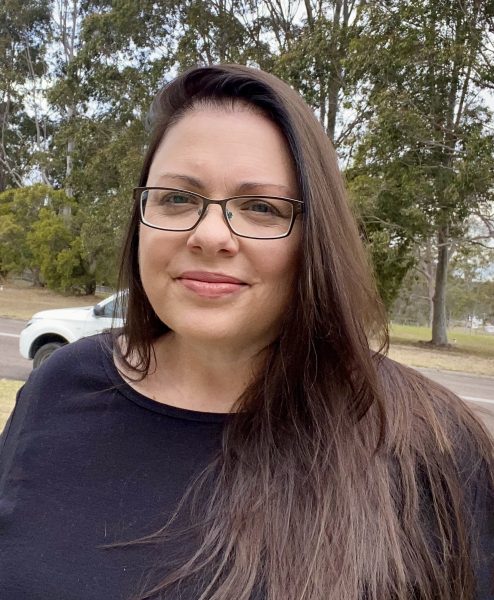
Dr RK (Kath) Crosby is the CEO of research and strategy company KORE CSR, former strategist for the Australian Democrats, and holds a PhD in political behaviour. She is also a well known migraine and health advocate, and the Publisher of New England Times and North Coast Times.
All opinion and comment on New England Times Engage is the opinion of the writer and not New England Times.
Got something on your mind? Go on then, engage. Submit your opinion piece, letter to the editor, or Quick Word now.
The abuse, neglect, harm and injury that this agency inflicts harm on is outrageous. I’ve been dealing with a complaint for 9 months to have the agency correct records they changed.
They’ve tried to coheres me into filing out a form to fix their own errors. I’ve repeatedly refused to. If I was to do so and sign the document I’d be knowingly engaging in fraud.
They’ve closed complaints that they haven’t even reviewed, lost documents, ignored at risk emails as has the Minister.
Their is no accountability or recourse for the damage and injury they inflict on the disability community.
Abuse, neglect, harm and injury this agency inflicts on participants is negligent. There is no accountability.
It’s not just the NDIS either Inclusive Employment Australia (previously Disability Employment Services) is not up to scratch either. Members of the Australian Unemployed Workers Union and the Anti-poverty Centre are investigating providers who are bullying participants into having in person appointments when phone appointments are allowed under the legislation. One participant had agoraphobia and was being pushed into having in person appointments, seems stupid if nothing else
Dallas Muirhead I have crps in my left foot so can’t walk most days and they refused to let me have phone appointment more than one in a row stating I had to sign paperwork all the time
Dallas Muirhead I’m currently on a medical cert but will reach out when free
Dallas Muirhead theres an anti poverty centre? Omg I need their contact and any other NON government funded service that advocates for basic human rights.
Brilliant, well written piece – thank you. I knew I was entering an ableist system the first time I was referred to as a ‘Participant’. And don’t get me started on ‘Capacity Building’ 🤦♀️The NDIS is not just ableist tho, it’s extremely cruel.
Nik Ynez they told me they wanted to capacity build me ,eg a worker to teach me how to cook.
Hahaha I raised 3 kids.i just can’t stand on one leg.
Nik Ynez what about their overuse of the word impairment? They’re not talking about themselves either, when using the word impairment, the NDIS is referring to a person’s disabilities!
Ndis sux
Under the state system which state you lived in determined whether or not you got any support. People denied support in Qld could obtain support if they moved to NSW. The states only provided a limited range of wheelchairs that weren’t suitable for a large number of disabilities. Young people were forced into Aged Care due to lack of support. There has been a huge increase in the number of people seen out and about in wheelchairs since the NDIS came into being. Yes access is patchy. Ironically many participants who have gained NDIS support for mental health or autism have been refused it for their physical chronic illness even when their major and most severe disability is their physical chronic illness. The states gave more money per person but to many less people. You are correct anyone who has a disabled family member is not at all surprised by the murder suicide. Sad very sad but also extremely understandable.
If you think things are bad now folks, wait until the new NDIS planning model starts later this year. It’s looking freakishly like Robodebt 2. Using AI-computer-generated funding assessments (with the I-CAN program) to make, potentially damaging decisions about people’s lives without proper human oversight or transparency. Add in the scant opportunity for input by the individual’s medical and allied health specialists and very limited options for administrative review, the impact will be dire for many in the NDIS community. So many are already vulnerable, exhausted, confused and under-supported. This is truly frightening.
Wendy Berkley I was a victim of robodebt. It nearly took my life. There’s a good doco on SBS catch up about it at the moment.
Susan, I’m so sorry to hear this. Robodebt was a very dark period in many people’s lives. I hope you’ve been able to recover and get back on your feet?
I watched ‘The People vs Robodebt’ when it was screened last year on SBS. It’s difficult to fathom how it went on for so long and how many lives were ruined by a system which is meant to be a social safety net.
I am increasingly concerned about changes to the NDIS, especially after the tragedy in WA where it appears a family of four succumbed to the immense pressures of dealing with the NDIA in the worst way possible. I fear this is only the beginning …
Take good care of yourself 😘
Wendy Berkley yeah I’ve mostly recovered from the trauma. Got my money back. That’s the doco I watched during the week. I already know a couple of people who struggle with the NDIS. They need it but the stress it puts on them makes them want to walk away. I’m worried too about future more extreme stresses put on them
Susan, I’m so glad you are feeling better and got your money back eventually, but you shouldn’t have had to fight for it in the first place. I wish all the very best for you.
The NDIS is an absolute cesspit. 10 years working in it and I have a lot to say…. It’s the biggest waste of taxpayers money that ever happened.
Not because people with disability do not deserve the exact supports that they need, it’s because for the last two years, I have systematically taken note of providers doing the wrong thing, and due to the way the NDIS is set up, and the complete lack of accountability by anybody in it, I’d say more than half of providers are either defrauding the NDIS on purpose, defrauding it through a desperate will to stay in business, and not lose everything, and then they are the plainly incompetent and unsafe providers.
This morning I read a post from a person who said they had bought a registered NDIS business, and needed help because they have bought the business, but that’s where the skill and knowledge stopped.
They had zero intelligence around what to do once they had paid the money for the business. ZERO.
This is literally how the NDIS works.
Again, complete and utter cesspit. The fraud, dangerous practice, and race to the bottom is very real.
Excellent article. The only thing I don’t agree with is going back to the state system. Here in Victoria, everything that used to be available for people with disabilities, whether it be local government or the state government, has been passed onto the NDIS fund. There are no systems in place anymore. Our daughter was part of the H E N program and that is gone. They’ve stopped funding it for people with disabilities, and it’s now claimed on the NDIS. Our health system here is bad enough, to even imagine this government being responsible for disability is just too frightening to think about.