
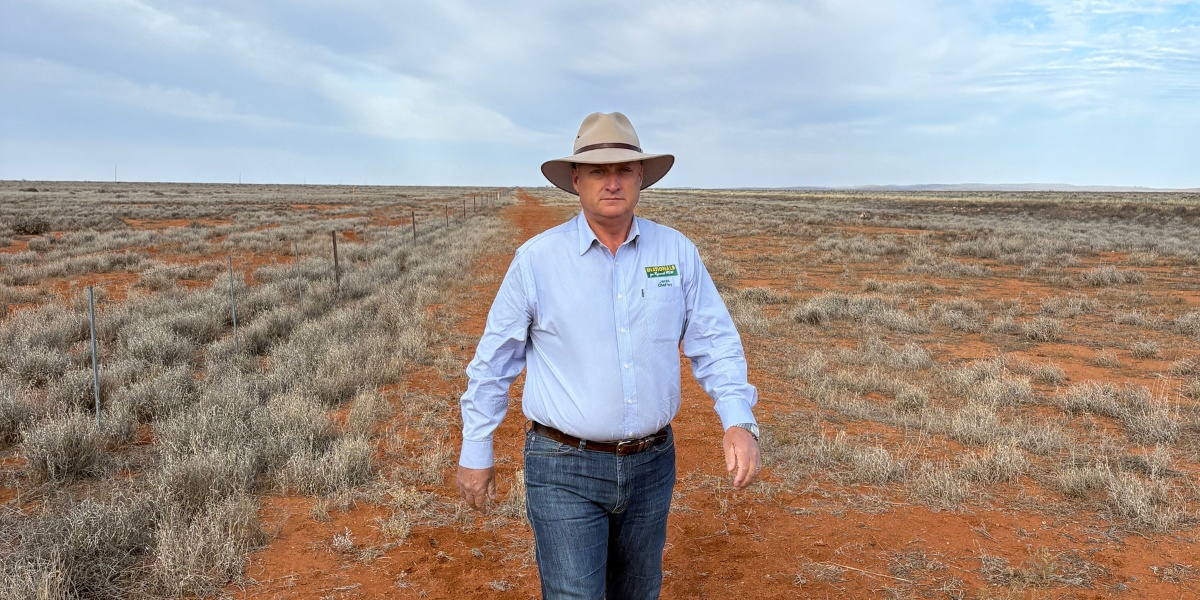
I’ve been on the road in the electorate of Parkes over the past couple of weeks, which has only confirmed to me the importance of connections and good transport between our towns and cities.
When you live in a remote or regional area, you have to travel. It’s a fact of life. You have to travel for medical appointments, business reasons, family events, and so many other reasons.
This is one of the reasons why it is so important to ensure we have reliable and sustainable airline services.
The recent news that there is a United States buyer for regional airline Rex could be good news, but it is very early in the process, and there are many questions to be answered.
This is more than just a business for people in regional New South Wales. It is a lifeline. The issue of regional airlines is much wider than just Rex. We need this airline as we need the others that are currently operating in regional areas to provide the number and regularity of services that are required.
I will be keeping a close eye on this development to see exactly what it will mean for people who live in regional New South Wales.
Another absolute necessity in the electorate of Parkes are reliable regional roads.
I have spoken before – both in Chaffey’s Corner and in Parliament – about the decline in the Federal Government’s commitment to funding for regional roads. It has been in a steep decline for the past three years.
During the time of this Federal Government, the road infrastructure backlog figure has blown out to an average of $236.7 million a year across the Parkes electorate, according to NRMA figures.
That is an increase of more than 250% in the electorate in the years of this Labor Government.
In addition, Parkes electorate councils have been knocked back for about $150 million of the funding they have sought to fix roads damaged by disasters in the past three years. That is a massive amount of money for our small councils to find just to restore their roads networks to the same standards.
Safe and reliable roads aren’t a luxury. They are an absolute necessity for regional Australians.
The Albanese Government’s plan to find an answer to substandard roads by telling regional people to drive more slowly is laughable. Labor Minister Catherine King is proposing reducing speed limits on dirt, gravel or sealed roads in need of repair.
It is unreasonable and unfair to again put the burden on the people of the Parkes electorate to make up for the government’s lack of support for regional New South Wales.
In the past couple of weeks, I have been to Moree for the opening of a new Westpac service centre, I have been to the ORISCON Cross Cultural Festival in Dubbo, helped celebrate 100 years of the Royal Far West in Dubbo, I have talked to Broken Hill City Council, the Rural Doctors’ Network and a number of other organisations about the potential for improvement to health services in Broken Hill, talked to Wilcannia residents about the future of the weir, and had more meetings in Narromine and Parkes.
It’s time to go back to Parliament for two weeks and then I look forward to being out and about in the electorate again, including for the presentation of the Member for Parkes Vocational Student award in a number of schools.
Got something on your mind? Go on then, engage. Submit your opinion piece, letter to the editor, or Quick Word now.
So why didn’t they support the retention of REX Airlines?
Labor Northern Tablelands Airlines / aeroplanes use an immense amount of avgas and have an incredibly high maintenance schedule that is almost 1:1 (flying : maintenance) and that makes air transport very expensive (read “uneconomic”).
By circa CE 1965 the Oil Industry Lobby (OIL) realised that Heavy Road Vehicles wreck highways and (same distance same mass load) use far more (about 3 times) diesel fuel than rail transport – so they (OIL) compromised polly’s everywhere to get Australia’s rail network “minimised” and Australia’s inter-capital road network maximised.
By CE 1990 all that was left of Australia’s regional mesh/loop Rail network was a very thin Star network barely interconnecting the State Capital Cities – no through inter-district connectivity and none of these rail alignments were “straightened” like the road highways were.
Trains are “out of favour” because the (far too narrow) CE 1805 “Standard (rail) Gauge 4’ 8” was initially made for 6′ (1829 mm) width rail cars that are not wider than the average road car.
Commercial Rail cars very quickly morphed to being 8’ 0” (2440 mm) in width and Brunel’s 7’ 0” rail gauge was perfect for these rail cars / engines. Brunel’s “Broad” rail gauge (170 km London – Bristol) was far too good and was politically abolished by Stephenson (CE 1846).
In Australia (with a rather small population) – most of the tens of thousands of km of rail tracks were manually constructed between CE 1850 and CE 1910.
Because of manually constructed winding rail tracks, trains speed is limited to less than 80 km/h (if not 40 km/h) – and this makes the rail network inherently inefficient for safe quick rail transport over 150 km/h.
In the CE 1930s luxury trains cars fattened out being 10’ 0” (3040 mm) wide – still using the 4’ 8.5” (1435 mm) “Standard” rail gauge and this is inherently unstable.
Australia has the golden opportunity for sensible engineering to introduce an Australian “Wide” rail gauge of 2540 mm (2.4 m) 100” (8’ 4”), and slightly straighten the pre-existing rail alignments to have most radii greater than 4 km – facilitating very low maintenance, fuel efficient Quick Rail transport at nominally 250 – 350 km /h between Regional Intermodal Ports.
Thought of the day, You can build train lines cheaper then roads. And train tickets are more affordable then flights.
Build a combined tamworth Armidale airport half way between towns with existing rail for transit. This would dramatically reduce maintenance on two airports and increase viability of services.
Interesting – he talked “Air” and “Road” as the primary transport mediums and not a mention about Rail that is far lower overhead, far more energy efficient and far lower consumption of diesel fuel per same mass load over the same distance than Road and Air. Any guesses as to whom is quietly filling his back pockets??
Spot on Jack and these are the messages Jamie Chaffey should be shouting from the rafters. Regional passenger and freight trains are the way forward and the only real direction Aircraft and roads have their place but without rail we do not progress.
As mentioned in other comments, the post mentions air and road but no rail transport, which many city people take for granted as they have so much of it.