

I’m a big believer in free speech.
I know a lot of people are confused by my political position, believing I must be Labor, Liberal, or this, that or the other. My political views are pretty well set, but they simply don’t line up with any party currently on the Australian scene. I was an Australian Democrat in the Natasha Stott Despoja era, but on the right wing of that very centrist party, if that helps.
Because I hold a different political view from, well, pretty much everyone, on pretty much every issue, I appreciate the value of being able to voice it.
I also believe the true test of a democracy is being able to sit and listen respectfully while someone promotes that which you would spend a lifetime opposing.
Don’t talk over them. Don’t shout them down. Don’t deny their equal right to participate. Just listen.
Then you can have your say while they listen.
It is in the listening that we learn, grow and progress as a society.
I also fundamentally believe that if you cannot express your political view without resorting to personal insult, then it is not really a political view. It is just boring old bigotry.
To invoke George Brandis’s somewhat notorious line, you have a right to be a bigot. But you do not have a right to inflict that bigotry on other people and pretend it is a valid contribution to our democracy.
That distinction came to mind while I was watching this week’s Australian Story episode about Barnaby Joyce. I personally found the program boring and deeply unsatisfying. (And, given the hours of interviews, phone calls and disruption involved for those of us who contributed—multiply that by the half-dozen people like myself who appeared for barely a line—it also felt like a questionable use of taxpayers’ money.) The entire program’s principal revelation seemed to be that ‘Barnaby likes Pauline’.
Whoop-de-doo.
Still, one part has stayed in my head.
No, it wasn’t Barnaby failing dismally to look like an experienced horseman. As funny as that was.
It was another who appeared without much context for barely a line. One of his ‘friends’, Liz Coxhead, who I understand defected with Barnaby to One Nation. Early in the program, she said:
“When Barnaby came out and joined One Nation, other people thought, well, you know, it’s OK, you can say what you think.”
This one line has stuck with me because it’s just objectively wrong, but also really scary.
You have always been able to say what you think.
But if you cannot figure out how to say it respectfully, don’t say it. That’s just common decency.
And if what you think is so hateful that there is no way to say it respectfully – literally no way to express that view without causing hurt to people – then don’t think it.
I’m not talking about dropping the odd swear word while expressing your views. I swear like it’s punctuation, particularly when I’m on a bad migraine run. And I think most adults are not especially troubled by it these days so long as there are no young children around.
But if what you think is that another person, because of their colour, race, ethnicity, nationality, visa status, gender, sexuality, politics or anything else, is somehow a lesser person than you, then your thinking is what is wrong.
If your thinking is rooted in conspiracy rather than fact; if it fills you with an overwhelming sense of fear; if it makes you want to deny another human being rights, dignity or safety… then that thought deserves to be questioned – not amplified.
No one can fix your thinking but you.
You can start by asking yourself why the political forces that have influenced you want you to think and voice such hate. Why do they want you to be afraid? Why do they want you to hate people for no reason other than their identity? Why do they want you to say hateful things—and who actually benefits when you do?
Because for damn sure, it isn’t you.
It is a seductive idea that a prominent politician joining One Nation grants everyone else permission to say the hateful thing they previously kept to themselves. Those who object can simply be dismissed as “woke” or “weak”. Online abuse can be recast as courage, and cruelty can masquerade as candour.
But speaking without restraint is not the same as speaking freely. Credibility is not measured by your willingness to humiliate somebody more vulnerable than you.
Your angry post may briefly reinforce Hanson’s delusion that the country is behind her. In your own life, however, you aren’t gaining from saying hateful things. People will think less of you. You will lose friends, possibly even family. You may lose business, or your job, and general standing in the community, if you continue.
That is not censorship. It is other people exercising their own freedom to judge your character based on your behaviour and what you have chosen to say, and decide whether they want to associate with you.
And when One Nation’s support disappears into nothingness, as support for political movements like this always does eventually, you will be left with damaged relationships, a reputation that cannot be repaired, and nothing to show for it but a whole lot of disappointment.
That’s just karma. You hurt people today; you get hurt tomorrow.
Barnaby Joyce argues that the voters have changed. I am not convinced. People may be more frightened and angrier than they once were. The pandemic contributed to that, and social-media algorithms have relentlessly amplified it.
And I do understand that fear and outrage are profitable, politically and commercially.
Come election time, voters will look for a true leader, as they always have: the person best placed to represent them and deliver the best outcomes for everyone. The one that gives them confidence and hope, not anger and division.
Leadership is definitely not the art of discovering what people fear and then amplifying it back to them to generate more fear – that is just a death spiral to destruction of our very way of life.
So yes, you can say what you think. You always could.
Say it honestly. Say it robustly. Say something unpopular if you believe it needs to be heard.
But freedom of speech does not free you from the responsibility to think about what you are saying.
End rant.
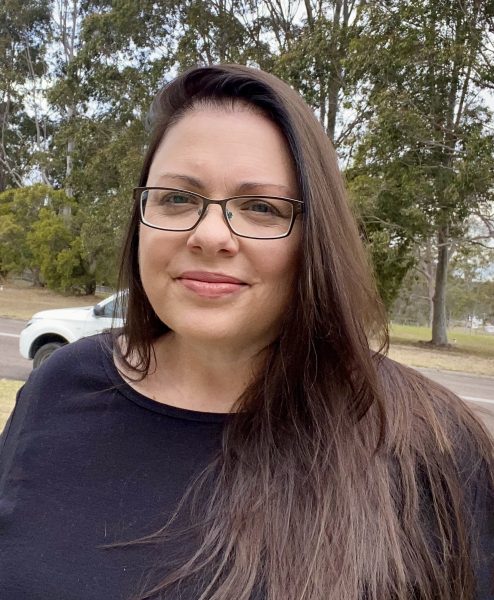
Dr RK (Kath) Crosby is the CEO of research and strategy company KORE CSR, former strategist for the Australian Democrats, and holds a PhD in political behaviour. She is also a well known migraine and health advocate, and the Publisher of New England Times and North Coast Times.