
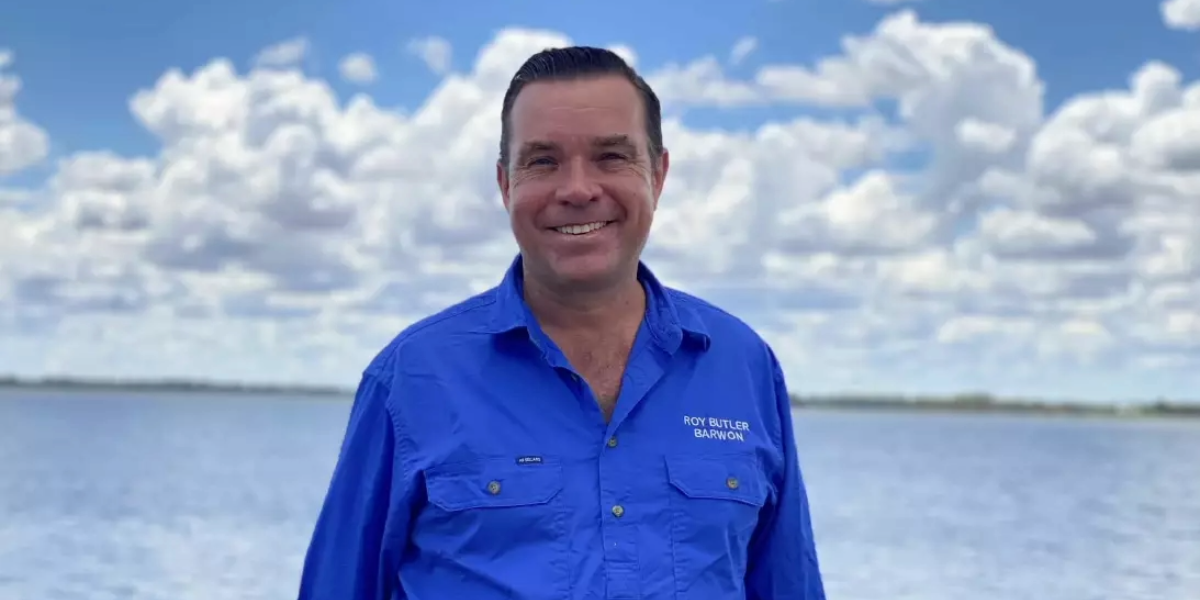
Roy’s Roundup 8 June 2026
G’day folks,
After two very busy consecutive sitting weeks, it will be a nice change to have a bit of time away from Macquarie St, before we return later in June.
The last two weeks have been a productive time. Over the last fortnight there were some important events held, meetings attended and legislation debated, I have also foreshadowed the introduction of an important bill about using evidence in creating legislation. But it will be good to be on the road again.
Over the King’s Birthday long weekend, I went to a Men’s Health event held by my colleague Phil Donato in Orange, and next week I will back out around the electorate.
Student Leadership Program
One of my favourite parts of being an elected representative is to meet with young student leaders who come to Parliament. Every year NSW Parliament hosts students from high schools across the state for its Secondary Student Leadership Program, which gives me a great opportunity to interact with school captains.
This year there were students from Gilgandra High School, Broken Hill High School, Narrabri High School, Warren Central School, Condobolin High School, Coonamble High School, Dunedoo Central School, Lake Cargelligo Central School, Tullibigeal Central School and Nyngan High School.
As part of the program students are introduced the way Parliament operates, then a panel of members give a brief overview of what it is to be an elected representative, before the panel takes questions from the students. There were some interesting questions asking about how a person gets into politics, how do parliamentarians stay grounded given the job they do, what can be done to better resource public education and even a question on what happened with the Inland Rail project.
I later took all the students and their teachers to lunch at Strangers Restaurant, which allowed them to continue the conversation and gave them a chance to dine amidst other parliamentarians.
I am sure they had an informative day, learning about our democracy, how it works, and engaging with elected members. I hope it inspires at least some of them to follow a path as a leader in their community, if not to stand for public office.
Whatever they choose to do I wish them all the best in their studies and in their lives beyond school.
Evidence based legislation
The role of state parliament is to make laws that are binding on all citizens of NSW. Those laws can have a profound effect on people, businesses and organisations, so it is important that those laws be created with reference to evidence and in consultation with those it will affect.
Over the last two sitting weeks I have introduced two notices of motion and delivered a Private Members Statement about evidence based, consultative legislation. It is something that I feel quite strongly about and so should any reasonable parliamentarian or any constituent.
One of the fundamental pillars of our democracy is that our elected representatives create laws that are well considered, based on hard data and facts, and that they don’t make these laws in a vacuum, but talk to the people, industries, organisations and institutions that may be affected.
The In the last week of May I introduced a Notice of Motion asking the parliament to acknowledge “that the people of NSW deserve strong evidence and proper consultation to be used in the development of legislation.” Also, that they consider that “public money needs to deliver public value”
In my notice I mentioned that “several actions of, and legislation by the NSW Labor Government have not any used evidence or consultation.”
I also foreshadowed that I would introduce a “fairness bill” to the NSW Parliament, requiring the use of evidence and consultation in any decisions or legislation. I urge anyone who believes in democratic process and good policy to contact their local member and encourage them to support the concept and the bill.
My Private Members Statement provided some specific details of some pieces of legislation passed in recent times that fly in the face of those principles including the firearms laws rushed through the house in the wake of the Bondi shootings, the Water Management Amendment (Easements for Inundation) Bill 2026, which threatens to inundate farming land, and the Prevention of Cruelty to Animals Amendment (Enforcement and Operational Powers), which has implications for agriculture. In each case the broader operation of the legislation had not been fully thought out, little consideration was given to what effects the laws might have on people in regional areas.
In a democracy there is a contract between the people and their government, where the people grant the authority to govern but expect that the government acts carefully and in the best interests of all they govern.
At the moment there is nothing enshrined in law to compel our lawmakers to use evidence to compile their legislation. The bill I will introduce will recognise the need for governments to act quickly when time is of the essence.
In another Notice of Motion, I said that it was a form of disrespect to people in the country that they are not consulted on issues that are fundamental to them
To see my Private Members Statement go to https://youtu.be/9dOAzgih3vU
To see my Notice of Motion on evidence-based legislation go to https://youtu.be/t4hJt9gwPmk
To see my Notice of Motion on the government disrespect for regional areas go to https://youtu.be/Bso7nbr4hng
The full text of my Notices of Motion can be found on Hansard at
https://www.parliament.nsw.gov.au/la/papers/pages/notice-tracking-details.aspx?pk=21814
And https://www.parliament.nsw.gov.au/la/papers/pages/notice-tracking-details.aspx?pk=21990
Primary Health Care Bill
During the June sitting week my colleague Dr Joe McGirr held an event to talk about his six-point Rural Health Plan.
The plan, which I have talked about before, focuses on ensuring regional communities have better access to doctors and medical services, more maternity facilities nearer to home, local staff not temporary fly-ins, more say in health decision making, a Rural Health Commissioner to make health services more accountable and more integration of medical services to meld health care into a more cohesive unit.
At the event were representatives from a range of organisations including the Country Women’s Association (CWA) of NSW, Rural Doctors’ Association of NSW, Royal Flying Doctor Service NSW / ACT, and members from both sides of parliament including the Health Minister Ryan Park MP and the shadow health minister Sarah Mitchell MLC.
All agreed that there is no simple solution to a problem that has developed over more than a decade, but they also agree that what is needed is a bi-partisan approach. The regional health system badly needs more investment and more attention at state and federal level.
Dr Joe also has a bill before parliament, introduced earlier in March, which aims to enshrine part of his plan in law. The Health Services Amendment (Right to Primary Health Care) Bill primarily seeks to make it a function of Local Health Districts to ensure that regional communities have “appropriate and timely access to in-person primary health care service”, which is defined as a service accessible within 2 hours of a resident’s home.
I spoke in support of Dr Joe’s bill. We need to be committing resources to solving problems like the poor health outcomes of people in the country, due to a badly neglected medical system.
To see my speech go to https://www.roybutler.com.au/video_clips
Arm Wrestling for Men’s Health
I was in Orange over the King’s Birthday Long Weekend for an unusual event called Gettin’s a Grip, which was arm-wrestling competition, to launch Men’s Health Week.
I was one of the competitors, pitted against Minister Steve Kamper. Unfortunately, I am not likely to be part of any Olympic arm-wrestling team – the Minister won our bout – but I was more than happy to be part of the competition.
An initiative by my parliamentary colleague Phil Donato, the Member for Orange, and hosted by TV personality and builder Barry Dubois, it brought together men, and some women, from a range of backgrounds to talk about different aspects of men’s health, both physical and mental.
There some inspirational and moving stories from people like Bruno Efoti from the organisation Tradies in Sight, which reaches out to young apprentices and regional men to provide counselling and emotional wellbeing services. There was also a talk from pharmacist Jack Buckley, who gave some tips on checking for things like testicular cancer, another silent killer.
One of the overriding messages was that men tend to keep their problems to themselves hoping they will get better, but that getting a check-up or a test, or opening up to someone about your concerns can save lives.
Men’s health is a particular problem in Barwon, where some towns don’t have a GP and many men also put off going to see a doctor or other health professional for various reasons including distance, or just hoping that their problem will go away. There are also very few mental health services and a tendency for men not to talk about these sorts of problems. This is where events like Gettin’ a Grip are important for starting the conversation and showing men that it is okay to ask for help, also showing that it is vital that we reach out to our mates, or neighbours, more often.
While I was there, I took the opportunity to get a check-up from pharmacist Masoud Rezvanian, there have been some changes for the better since my last check up, but there is always room for improvement.
Civics – Hansard
If you have followed any broadcasts from Parliament have probably heard people refer to something called Hansard and wondered what it is.
Hansard is the official record of proceedings in Parliament. It is not a strictly a direct transcript of every word that comes out of every parliamentarian’s mouth while they are in the chamber, but a corrected version of what is said, with things like repetitions, ambiguities and superfluous words removed. Interjections are also mostly removed, unless they are responded to by the Speaker.
Every day in Parliament there are people recording everything said by every politician in the Legislative Assembly and the Legislative Council. This is done by a combination of people taking notes, voice recordings, software that turns speech into text and written copies of speeches, notices of motion and other contributions made by parliamentarians which are given to the clerks after they are delivered.
Transcriptions are made based on all these sources and they are edited by a team of editors who tidy up the text so that it is easier to read, while keeping the original meaning and intent of the text. Copies of transcribed speeches are sent to parliamentarians who can make some minor corrections if needed.
The editing team works to tight deadlines. Transcripts are published online within three hours after the words were spoken in the chamber.
The searchable transcripts are available at the NSW Parliament website, https://www.parliament.nsw.gov.au/Pages/Hansard.aspx going back to 1988, but earlier copies of Hansard can also be downloaded from the NSW Parliament website as PDFs.
Hansard is useful for parliamentarians to see what has been said on a given topic or by particular parliamentarians, or to follow a debate, when they can’t be in the chamber to hear them, or to check to see what was said even if they were there for the original speech.
I would encourage anybody interested in seeing exactly what their local member says in parliament to have a look at Hansard; it can be a fascinating and eye-opening read.
Facts:
Up until the late 18th century it was illegal for people to publish transcripts or reports of what happened in the British Parliament. It was believed that proceedings should be kept secret so that constituents couldn’t place pressure on parliamentarians for what they had said in the chamber. Publishers challenged the law against publishing accounts of proceedings and by 1775, when John Almon and John Debrett began publishing the Parliamentary Register, Parliament had ceased to punish people who reported on parliament or published transcripts.
In 1803 William Cobbett began publishing a transcript of speeches in his Parliamentary Debates, which was printed by Thomas Hansard. Hansard later took over Cobbett’s publication and later, in 1878, received a government subsidy for his publication and in 1890 the government took over the publication, making it the official transcript of what goes on in parliament.
The earliest editions printed by Cobbett and Hansard are considered unreliable because they did not employ their own note-takers or stenographers but compiled their accounts from various sources.
In the years before sound recording made it possible to get an accurate record of everything said in parliament the record relied on the accuracy of people taking notes.
The first parliament in Australia to have Hansard was in South Australia, where proceedings of its parliament were first recorded in 1857. NSW has its first Hansard in 1879, before then the most comprehensive record of parliament was printed in the Sydney Morning Herald.
All opinion and comment on New England Times Engage is the opinion of the writer and not New England Times.
Got something on your mind? Go on then, engage. Submit your opinion piece, letter to the editor, or Quick Word now.