
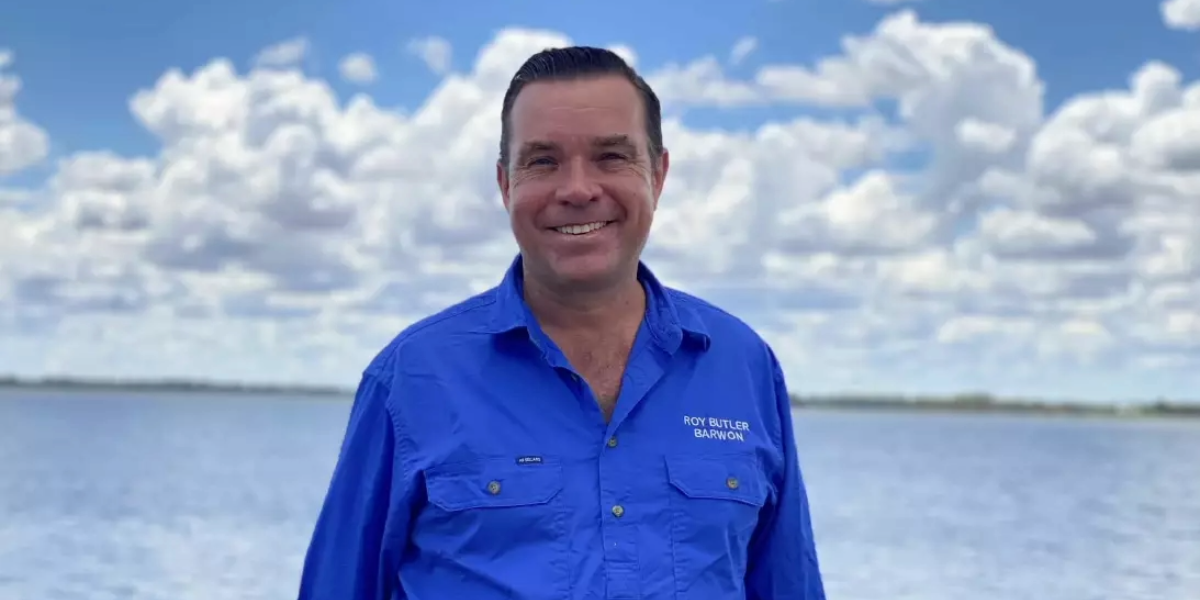
Roy’s Roundup 25 May 2026
G’day Folks,
It has been a busy period over the last couple of weeks, and things are likely to be just as busy over the coming fortnight.
Two weeks ago, I was in Parliament, last week I was in Broken Hill for the celebration of 90 years of the Royal Flying Doctor Service in Broken Hill and serving NSW, as well as hosting the UK Consul-General and the Minister for Local Government on a visit to the electorate, and this week I’m back in parliament for the first of two consecutive sitting weeks.
It will soon be June, which not only means winter and colder weather, but also State Budget time. With an election not too far off it should be an interesting sitting period.
Inland Rail derails
Earlier this month the Federal Government announced that it was pausing the Inland Rail project due to huge cost blowouts of $45 billion.
The project had already suffered from numerous serious problems, including a lack of a route to either the port of Melbourne or the port of Brisbane, but there were also problems with transparency and cost overruns.
Now there are more problems for the many councils who spent a lot of money preparing for the rail to come through their shires, with land surveys, building infrastructure and preparing for the large workforce.
A lot of businesses also based investment decisions on the rail coming to country areas.
These people and organisations have been left out of pocket, with the project in limbo, with nothing to show for their efforts and expenditure.
During the sitting week, I moved a Notice of Motion asking that the house:
1) Notes the Federal Government has paused the Inland Rail Project after a $45 billion cost was revealed.
(2) Notes that there was never a route to the port of Brisbane or the Port of Melbourne.
(3) Supports the exploration of a Queensland Gladstone rail and sea port in the future.
(4) Calls on the Federal Government to compensate Councils outside of the newly defined route to restore funds that have been spent preparing for inland rail with no result.
(5) Encourages investment in the Newcastle line and port facilities to streamline produce from western New South Wales getting to port.
This project could have been great for the state, but it was hampered by poor planning decisions, a lack of consultation and transparency.
The federal government needs to take a good look at what went wrong.
Wee Waa Hospital news
Also, during the sitting week, I delivered a Private Members Statement about Wee Waa Hospital.
It has been three years since the people of Wee Waa received the bad news that the operating hours of their local hospital were being reduced to between 8am and 5.30pm.
This was the result of more than ten years of neglect by the previous government that had led to staff shortages, reduced capacity in their emergency department and no visiting medical officer (VMO).
Turning around more than a decade of neglect, and resistance from some elements of the management, was going to take some effort.
While the community organised rallies and a petition, I introduced a bill to split the Hunter New England Local Health District, arguing that country hospitals were having decisions made about them from a metro headquarters. The important part of introducing the legislation was to have it referred to a committee to put the management of the LHD under scrutiny.
I also pursued, and was granted, an independent review into the decisions that led to the reduction of hours, which identified some of the systemic problems. The review handed down 20 recommendations to improve the culture within the local health district, including strengthening nurse leadership and introducing a single service model across Narrabri and Wee Waa hospitals that would improve management and the ability to recruit and retain staff.
The review also recommended establishing a Local Health Committee, who would be consulted every step of the way implementing the recommendations, and an implementation plan was drawn up to ensure that there was a structured process for implementation.
Since the introduction of the plan more staff have been recruited, and it is hoped that they will soon have enough staff to sustainably increase the hours of operation at the hospital.
There is still some way to go, particularly to win back the community’s trust in the management of the health system, and to reverse years of neglect, but the news is certainly better than three years ago.
To see video of the Private Members Statement go to https://www.roybutler.com.au/video_clips
Water Easements bill
There are some serious problems with the government and the way they keep walking past the need for community consultation in regional areas.
We had another example of the lack of consultation in the recent Water Management Amendment (Water Easements Inundation) Bill.
This bill allows water authorities to tread on property rights by inundating their land whenever they feel the need for an environmental flow.
It was being pushed through parliament earlier this month, with an inflated sense of urgency whipped up by media attention given to turtles getting stuck in the mud on the Gwydir River. It was argued that this bill needed to be passed to save the turtles by giving them a flow of water.
I offered the government a solution, to insert a sunset clause in the legislation so that water could be sent down to save the turtles, but that the legislation be referred to an inquiry so that proper consultation could take place to ensure that private property was properly protected and there were no unintended consequences coming from the legislation.
That was rejected and the bill passed. But it is another sign that the government is sometimes unwilling to listen to the people most affected by their legislation, which is making people in the bush anxious about what will come next and could have an impact at the ballot box next year.
RFDS 90 years in Broken Hill
You might remember my recent motorbike ride from Sydney to Broken Hill, carrying a Royal Flying Doctors emergency landing flare, decorated with indigenous artwork, as a sort-of torch relay.
It was to commemorate 90 years since the RFDS established their first NSW base in Broken Hill back in May 1926.
Last week they held the official commemoration of the anniversary, and I made my way to Broken Hill for ceremony, along with other guests including Louise Cantillon, the UK Consul General, Jamie Chaffey, the Federal Member for Parkes, Stephen Lawrence MLC, and Broken Hill Mayor Tom Kennedy.
Those who spoke at the event talked about the importance of the organisation in bringing medical care to rural and remote communities. The RFDS provides services to places that the government can’t, they are not merely a bolt on to the health system, they are an integral part of it.
There is also a high level of community involvement in the RFDS, particularly with fundraising by groups like the RFDS Broken Hill Women’s Auxiliary, who hold an annual fundraising gala and are also famous for their fundraising Christmas puddings. Input like this from the community helps keep the RFDS going.
At the event they showed a video of the flare relay ride, and afterwards, with help from Stephen Lawrence I unveiled an exhibit of the flare I carried, which will be a part of the collection in the exhibition hall of the RFDS Visitor Experience.
It was an honour to be a part of the ceremony, and I will continue to fight for recurrent funding for the RFDS to ensure that they can continue to provide services to people in country NSW.
To see video of the ride go to https://www.youtube.com/watch?v=baG-12dJ8Oo
UK Consul General and Minister Visit Barwon
Last week in Broken Hill I hosted both the UK Consul-General, Louise Cantillon, and the Minister for Local Government Ron Hoenig who were visiting the electorate.
The Consul-General took part in the ceremony marking 90 years of the RFDS in Broken Hill and NSW. Speaking at the ceremony she remarked that the distances in the outback were something that she was not used to, and that her country would fit 1.5 times into the electorate of Barwon. She also spoke of the long-standing relationship between the UK and the RFDS, which was given its title “Royal” by the Queen who visited Broken Hill in 1954, and King Charles III continues the link as patron of the RFDS Friends in Britain.
After the ceremony I took both her and the Minister around to various places in Barwon. We had lunch with the Mayor Tom Kennedy at the Line of Lode Cafe. Perched high on the mound towering over the city (known as the Line of Lode) it provides the most spectacular view of Broken Hill. While we were there the Minister and the Consul General also saw the Miner’s Memorial dedicated to the more than 800 miners who have lost their lives since mining began in 1883.
From there I took my guests to visit Silverton, stopping at my good friend Peta’s Silverton Outback Camels, which is known for its camel rides, but Peta also keeps an amazing menagerie of both native and domestic animals.
We also paid a visit to Don Barron, who runs a local organisation Feeding Friends which provides meals to the homeless. Don told us a frank story about how after building a computer business he ended up in prison but turned his life around when he came out. Then a chance encounter with a homeless man when he was coming out of a pizza shop put him on a path to helping the homeless, with food and a conversation, trying to help them choose a different path. He wants to make Feeding Friends into a registered charity, and I will be helping in any way I can.
The Minister and the Consul-General were also given a tour of the Maari Ma Aboriginal Health centre and were impressed by the quality of holistic care provided to the community by the staff there. Maari Ma has been providing high standards of health care for nearly 20 years in Broken Hill and in other areas.
We finished the evening with a celebratory meal at the Old Saltbush Restaurant, run by award-winning chef Lee Cecchin, who uses native bush ingredients in her cooking.
The Minister has been to Broken Hill before, but the more he sees of this part of the world the more informed he will be when making policy that relates to the Far West. The Consul also found her visit informative, which will have benefits for trade, investment and tourism relations between our two countries.
Civics – Local, State and Federal government responsibilities
Australia has a three-tiered system of government, broken into local councils, state governments, and the federal government. People are often confused as to what each tier does and what their responsibilities are.
I don’t have space here to detail every responsibility, but broadly councils deal with issues, assets and services that are within a given local shire, state governments deal with things that affect the area within a state’s boundaries and federal governments have a broader national focus as well as dealing with international relations.
More specifically each level of government has areas of responsibility, although there is some overlap:
- Councils collect rates from property holders, based on the value of a rate payer’s property. Rates are used to provide services such as waste collection, fixing local roads, community services, community centres, libraries and maintaining local parks and local monuments and memorials. In regional areas with fewer ratepayers but larger areas to provide services councils tend to be reliant on funding from the state and federal governments.
- State government collects payroll tax, vehicle registration tax, land tax, stamp duty, gambling taxes and a range of other taxes. With this revenue and funding from the federal government, it looks after schools, hospitals, police and emergency services, state parks, public transport, state tourism and events
- Federal government is primarily a funding body, collecting a range of taxes including income tax, company tax, goods and services tax, and customs among others. With that money it pays for defence, foreign affairs and international trade relations, postal delivery and telecommunications, but it also provides funding to the states and councils.
There are plenty of good resources online to find more detailed information, but it is worth checking to see which level of government is responsible for what before contacting an electoral office to raise an issue.
Facts:
Australia’s three-tiered system of government is not something we inherited from the United Kingdom. Known as federalism it came about because each of the states were once separate colonies, each with their own divisions of local shires. When these colonies joined together, or federated, in 1901, a national government was created to administer this federation of states.
The United States has a similar three-tiered system, with county boards, city councils and municipal boards in incorporated regions at the local level, individual state governments, each with their own congress, and a federal government run from Washington D.C.
In the Far West of NSW there is a region without a council. Known as the unincorporated area it covers 94,000 square kilometres and includes towns such as Silverton, Tibooburra and Milparinka. These towns are instead governed directly by the NSW Government, but local affairs are managed by village committees made up of volunteers and, because they collect no rates, they mostly rely on grants for any local needs or services.
All opinion and comment on New England Times Engage is the opinion of the writer and not New England Times.
Got something on your mind? Go on then, engage. Submit your opinion piece, letter to the editor, or Quick Word now.