
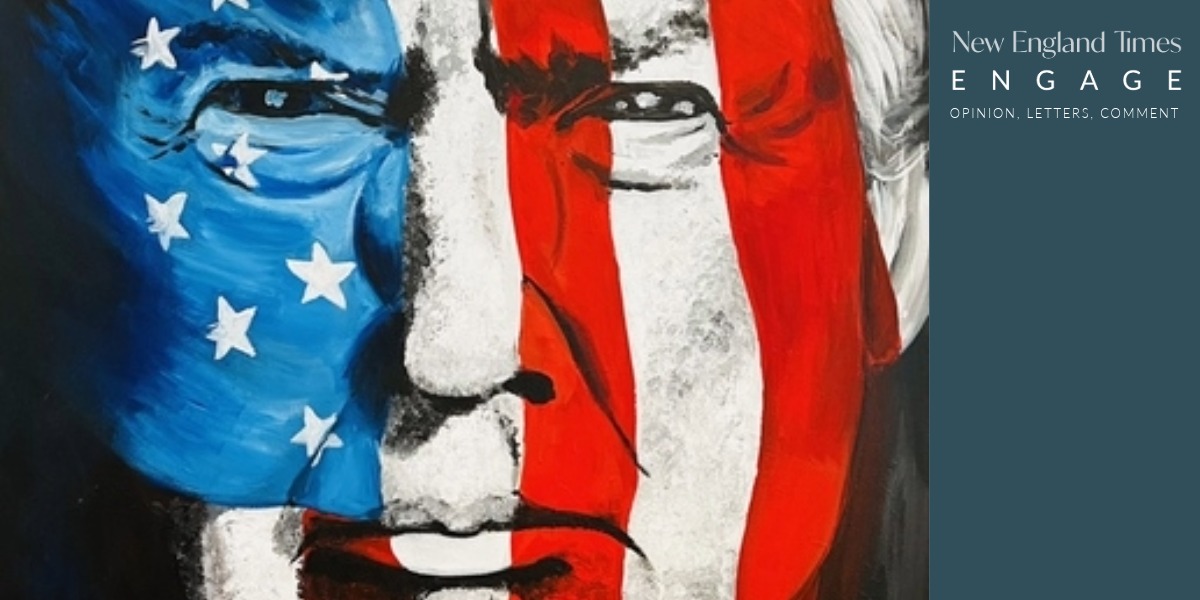
I was reading the paper once again and it is a rollercoaster of turmoil… Donald Trump wreaking havoc everywhere… one minute he’s threatening to destroy a civilisation, the next the Middle East is in a ceasefire… ahh, fuel price relief — and two seconds later that goes to hell.
That’s not an exaggeration. That’s the news cycle — chaos, hope, then chaos again.
And the problem is, it doesn’t stay on the page. It hits fuel prices, supply chains, confidence — and ultimately, it hits people. Right now, Australians aren’t just watching instability — they’re paying for it, every single week.
Nowhere is that clearer than on the land.
For farmers, it’s no longer just flood or bushfire keeping them up at night. It’s the cost of diesel and whether fertiliser will even be available when they need it — and what it will cost if it is. That’s the new risk — and it’s not coming from the paddock. It’s coming from global disruption — the kind being fuelled by a brand of leadership out of the United States that thrives on chaos — impulsive, ego-driven and reckless — where the consequences land not in Washington, but in places like Australian farms, businesses and households.
So, let’s be clear about what this moment demands.
Not more noise. Control.
Because we’ve seen what the alternative looks like — and it’s chaos.
Because when the world feels like it’s lurching from one crisis to the next, the last thing you can afford is to import that instability into your own politics. You want a steady hand — and whether people like it or not, that is what the Albanese Government has largely been delivering.
Not perfectly, but steadily.
Now — the criticism comes quickly: “Labor needs to be braver.”
Fine. I agree. I expect Labor to be brave. Big challenges — health, education, housing, infrastructure, climate, inequality — don’t get solved with small thinking.
And I’ll be making that case myself at the NSW Labor State Conference in July — because ambition matters, and Labor should never lose sight of that.
But governing effectively and competently is more complicated than just “being brave.”
Because bravery in opposition is easy. You can promise anything and take the boldest position in the room when you don’t have to make it work.
Governing is different.
It’s trade-offs, constraints and global pressures that don’t care about your messaging. It’s decisions that have to hold up not just politically, but economically, socially and practically.
Push too hard, too fast, and you risk blowback. Move without bringing people with you, and reforms don’t last. Ignore the global context — energy markets, conflict, supply chains — and even good policy can unravel.
That’s not weakness. That’s governing.
And governing isn’t about looking tough — it’s about holding things together when it counts.
And while the headlines swing wildly, there has been a steady effort to take the edge off here at home — not perfect, not fast enough, but steady: energy bill relief that actually lands, cheaper medicines, expanded bulk billing, support for wage increases, cheaper childcare, and investment in housing and aged care.
And when global disruption bites, it’s not being ignored. In that same paper, the Federal Government is fast-tracking $6.15 billion to support businesses, supply chains and manufacturing — the kind of targeted intervention that doesn’t shout but matters when it counts.
It’s not just federal, either.
At a state level, the same focus on delivery is playing out — planning reforms to unlock housing supply, investment in new and upgraded schools, and major transport infrastructure to keep communities connected and growing. Housing doesn’t get built through slogans, and roads, rail and schools don’t appear through outrage. They happen when governments stay focused long enough to deliver them.
No drama. No theatrics. Just pressure coming off, bit by bit.
That’s the part people miss.
We’ve become so used to loud, performative politics that competence can feel underwhelming. It isn’t. It’s the difference between a system that bends and one that breaks.
The frustration is real — you can see it in this paper every week. R.K. Crosby’s rants have real merit. They tap into something genuine: people are under pressure and they want change.
But frustration isn’t a plan. And turning it into constant outrage without delivery doesn’t fix anything — it just adds to the noise.
So yes — expect bravery. Demand it.
But don’t confuse noise with strength, or chaos with courage.
Because the alternative to steady government isn’t some bold, clean breakthrough — it’s more of what we’re already seeing globally: instability, disruption, and decisions made for headlines rather than outcomes.
And right now, Australians are already paying enough for that.
Part of the problem is perception. The media cycle thrives on conflict, crisis and spectacle — it amplifies what’s loud, what’s broken, what’s dramatic. That’s its nature. But it also means steady progress — the kind that actually makes a difference — barely cuts through.
At some point, people need to step back and see the reality through the noise — to see the forest, not just the trees. Because if you only look at the loudest moments, you miss what’s actually happening underneath.
Is it perfect? No.
But we don’t need perfect.
We need steady.
Because right now, steady is what’s holding everything together.
And in a world like this, steady isn’t weak — it’s essential.

Denise McHugh is an experienced educator in Tamworth. She is Chair of the NSW ALP Education and Skills Committee and Deputy President of the Independent Education Union (IEU).
All opinion and comment on New England Times Engage is the opinion of the writer and not New England Times.
Got something on your mind? Go on then, engage. Submit your opinion piece, letter to the editor, or Quick Word now.