
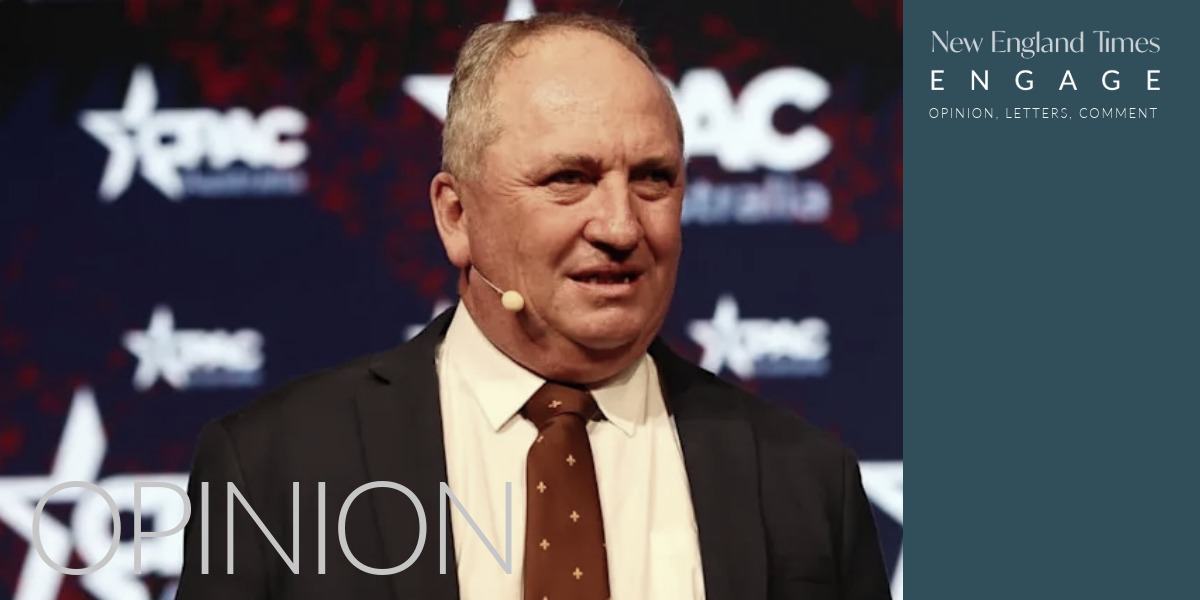
There are political conferences, and then there is CPAC Australia. This is the gathering where conservative politics puts on its best American accent, turns the volume up to eleven and spends a weekend warning that Western civilisation is approximately fifteen minutes away from collapse.
And this year, Barnaby Joyce was right at home.
His speech was quite something. Rambling, theatrical and occasionally bizarre, it wandered through economics, ancient Rome, Kazakhstan’s gold reserves and, for reasons known principally to Barnaby, sabre-toothed tigers. At one point he invoked the Roman emperor Caracalla, hardly the first historical figure most economists would consult for lessons in sound economic management.
Barnaby’s speeches are beginning to resemble Donald Trump’s famous rhetorical technique, which Trump calls “the weave”. Start with economics, take an unexpected detour through ancient Rome, drop into Kazakhstan, encounter a sabre-toothed tiger and eventually, presumably, find your way home. Joyce appeared to have opened seventeen browser tabs and decided to read them all aloud.
At times you half expected someone backstage to hold up a sign saying: BARNABY, THE SPEECH WAS ABOUT AUSTRALIA.
Quite how any of this helps a farmer struggling with rising costs, a family trying to find a house in Tamworth or a regional hospital desperately needing nurses is anyone’s guess. Perhaps the sabre-toothed tiger has a regional development policy we haven’t heard about yet.
Pauline steals the show
But Barnaby’s excursion into ancient history was only part of the spectacle. Something more politically significant happened at CPAC. Liberal leader Angus Taylor arrived hoping to present himself as the leader of Australia’s conservative movement and discovered he was effectively the warm-up act.
The star was Pauline Hanson.
Hanson received an enthusiastic reception, while Taylor was heckled when he avoided questions about cooperating with One Nation. Imagine being the leader of the Liberal Party and getting upstaged at a conservative conference by Pauline Hanson. Actually, Angus probably doesn’t have to imagine it.
Hanson certainly wasn’t gracious in victory. She described Taylor as a “smarmy management consultant”, attacked the Coalition’s previous policies and encouraged conservative voters to abandon it. Then, having thoroughly criticised the Liberals, she offered to work with them to remove the Albanese government, including potentially providing confidence and supply.
So apparently the Liberals are incompetent, untrustworthy and partly responsible for the country’s problems, but perfectly acceptable if Pauline needs their parliamentary numbers. Politics does make strange bedfellows.
There was a time when CPAC was considered a little too far out on the right-wing fringe for much of the Coalition. How times change. Angus Taylor became the first sitting Liberal leader to attend, while Barnaby Joyce didn’t look like an uncomfortable visitor. He looked like he had found the members’ lounge.
The reinvention of Barnaby Joyce
Joyce’s political transformation is extraordinary when you stop and think about it. He wasn’t some powerless backbencher watching politics from the cheap seats. He was Deputy Prime Minister twice, led the Nationals and served in Coalition governments responsible for decisions about immigration, energy, infrastructure, agriculture and the economy.
Now he stands alongside Pauline Hanson railing against the political establishment. There is a slight problem with reinventing yourself as an anti-establishment warrior when you spent years helping run the establishment. Barnaby wasn’t outside the room shouting at those in power. For a considerable period, he was one of the people in the room making the decisions.
If Barnaby believes previous immigration policies were disastrous, what was he doing about them when he was Deputy Prime Minister? If regional Australia has been neglected, why should voters forget that he occupied some of the most powerful positions in the country?
Politicians are entitled to change their minds and even their parties. But changing parties shouldn’t come with a complimentary memory wipe. These questions are particularly relevant in New England, where Barnaby has represented us since 2013. They are certainly more relevant than what happened to Roman currency under Caracalla.
Matt dresses for the occasion
Then we had Nationals leader Matt Canavan, who arrived wearing his familiar bright orange high-vis work shirt. What is it with Matt Canavan and work shirts? I’m beginning to suspect he’s partial to fancy dress.
Canavan has previously suggested that one reason he wears the shirt is because Labor hates it. Fair enough, although I wasn’t aware annoying the opposition was now a recognised fashion category.
There is something wonderfully theatrical about a career politician putting on workwear to demonstrate his connection with working people. Most people wearing high-vis do so because their jobs require it, not because they’re delivering speeches at political conferences.
To be fair, Canavan has consistently advocated for mining and regional industry. But there is a difference between supporting workers and dressing as one. And perhaps nobody mentioned that bright orange is also rather closely associated with One Nation. Given who was receiving the biggest cheers, perhaps Matt was simply dressing for the occasion.
Next year CPAC could introduce a fancy-dress competition. Hard hat optional. High-vis encouraged. Actual manual labour strictly unnecessary.
Who exactly is following whom?
Beneath all the theatre, CPAC exposed a serious problem for Australia’s conservative parties. Who exactly is setting the political agenda?
Taylor acknowledged what he regarded as mistakes by previous Coalition governments, including excessive pandemic spending, immigration levels and commitments to net zero. But there is an obvious difficulty with this strategy. The more the Coalition adopts positions championed by One Nation, the easier it becomes for Hanson to declare that she was right all along.
Pauline doesn’t need to win every argument. She simply needs the Coalition to start arguing on her territory. If conservative politics becomes a competition to see who can sound most like One Nation, One Nation will probably win. Hanson has been doing Pauline Hanson for thirty years. It is difficult to out-Pauline Pauline.
Meanwhile, what happens to moderate Liberal voters who support responsible economic management, business and strong borders but have little interest in endless culture wars? There didn’t seem to be much room for them at CPAC.
This is how political movements change. Ideas once considered fringe become talking points. Talking points become policy proposals. Politicians who once kept their distance begin appearing on the same stages. Eventually everyone pretends it was perfectly normal.
Meanwhile, back in New England
This is where I struggle with the whole performance. While Barnaby discusses Roman emperors and extinct species, and Matt puts on the high-vis, people across New England are dealing with rather more mundane problems.
Access to healthcare remains difficult. Housing is expensive. Businesses struggle to find workers. Roads need upgrading. Schools need teachers. Communities want reliable infrastructure and young people need reasons to build their futures here.
Farmers aren’t sitting around waiting for someone to explain the monetary policy of the Roman Empire. They want practical government.
And the policies being promoted at CPAC deserve serious scrutiny. Cutting immigration might generate enthusiastic applause, but what happens when regional hospitals, aged-care facilities, farms and businesses cannot find enough workers? A royal commission into net zero might excite the conference audience, but how does it reduce household electricity bills?
Australia has genuine problems, but complicated problems rarely have solutions that fit neatly on a conference slogan.
Barnaby has spent much of his career presenting himself as the champion of regional Australia. Fair enough. But after more than a decade representing New England, including years as Deputy Prime Minister, voters are entitled to ask what the new Barnaby, the One Nation Barnaby, intends to deliver that the Deputy Prime Minister Barnaby couldn’t.
The battle for the right
Perhaps the most revealing thing about CPAC was how dramatically Australian conservative politics has changed. Once Liberal leaders worried about being associated too closely with Pauline Hanson. Now the Liberal leader attends CPAC and finds himself being heckled by conservatives demanding to know whether he will work with her.
For years the question was whether One Nation could move into the political mainstream. After watching CPAC, perhaps we should be asking something different: is One Nation moving towards the mainstream, or is the mainstream moving towards One Nation?
When the applause has stopped, Matt’s high-vis shirt has gone back into the wardrobe and someone has finally located the last surviving sabre-toothed tiger, the people of New England will still need doctors, teachers, houses, roads and jobs.
And perhaps they are entitled to ask Barnaby one simple question: what are you actually going to do for us now?
Because I’d wager that’s what most people around here would rather hear about.
Caracalla can wait!
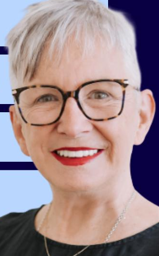
Denise McHugh is an experienced educator in Tamworth. She is Chair of the NSW ALP Education and Skills Committee and Deputy President of the Independent Education Union (IEU).
All opinion and comment on New England Times Engage is the opinion of the writer and not New England Times.
Got something on your mind? Go on then, engage. Submit your opinion piece, letter to the editor, or Quick Word now.