

What is the problem? What are the symptoms? What is the fix? And what will that fix actually achieve?
These are the basic questions you should be able to ask about any policy proposal. Actually, you shouldn’t have to ask, it should be abundantly clear from the proposal.
Ask those four questions of any policy from the last few months (years?) and the answers dissolve into incoherent noise.
Let’s start with screen time in NSW public schools.
What is the problem? Officially, “too much screen time,” in Education Minister Prue Car’s words.
What are the symptoms? NSW students “going backwards” on reading and maths, apparently in lockstep with time on devices.
What is the fix? Limits! Fifteen minutes of screen time a day for the youngest students, rising through the grades, mandatory by 2028.
What will it achieve? Probably absolutely nothing.
There’s plenty of research that has correlations of screentime to health outcomes and so on, but little evidence that its the screens themselves causing the issues. And literally any job in the world now, let alone in the future, requires competent use of computing devices, so it doesn’t make a lot of sense to limit or restricts kids learning how to do things on screens. There seems to be a complete absence of reality that the kids in year 9 now were some of those most significantly affected by the COVID disruptions, and we should be expecting them to have lower academic performance than other years. Next year’s NAPLAN scores will likely be worse again.
It might not be COVID. It could be teachers, curriculum, funding or class sizes doing the damage while screens sit there as a convenient, inanimate scapegoat. But you don’t need to bother doing that homework: correlation has been promoted straight to cause, with a stopwatch attached, and called a policy. Job done, please vote for us.
Next, the gun buyback.
What is the problem? Terrorists murdered 15 people at Bondi Beach in December.
What are the symptoms? 15 dead people. Grief, fear, and a government desperate to be seen responding to both.
What is the fix? Limits! Confiscating an estimated 274,000 firearms, a quarter of everything registered in the state, from owners who were already licensed, vetted and law-abiding.
What will it achieve? Pissed off farmers and not one thing to prevent a terrorist attack.
Premier Minns says “fewer dangerous guns in our community means a safer New South Wales”. Which is a sentence that sounds true until you ask which guns were dangerous in the first place: the terrorist’s, or the ones now being confiscated from people who had already done everything the law asked of them? The Nationals’ Jamie Chaffey calls it what it looks like: a scheme that “punished almost one million law-abiding Australians.”
Nobody has drawn a line between a terrorist attack and a farmer’s rifle. None of the people pushing these laws even know what they’re talking about. They have simply moved fast enough, and spoken confidently enough, that asking questions or criticising the ill-thought out knee-jerk proposal is some kind of betrayal of humanity.
When Independent MP Roy Butler tried to disallow the buyback regulation in state parliament he said clearly how I feel about the policy process generally these days: “This is something that shocked me in December, and it shocks me again now, that you can have people making laws in this state, making laws that have real impacts on people’s businesses, on people’s lives, without knowing what they’re talking about.”
Then we have immigration, which manages to be worse on all four counts at once, and a debate at fever pitch threatening to continue all the way through to the next federal election.
What is the problem? I literally don’t know. People are unhappy about many things and want someone to be angry at, so lets blame the brown people?
What are the symptoms? According to those pushing immigration reform, it seems to have a lot to do with housing/cost of living – rents nobody can meet, a generation locked out of ownership, a housing shortfall in the hundreds of thousands, cost of living is out of control, so all them foreigners must be taking our things…
What is the fix? You guessed in – limits! The federal government wants fewer international students bringing family, fewer backpackers, more detention beds for overstayers. The Liberals want migration capped at the number of homes built each year. One Nation wants the visa intake cut by more than half a million people.
What will it achieve? Nothing in terms of housing or cost of living.
Recession is an absolute certainty. Wide spread staffing shortages, businesses going broke, businesses leaving the country, universities folding, huge cutbacks in social services, people dying due to lack of doctors and other health professionals, complete collapse of the Australian economy… are all on the cards as a possible outcome.
Home Affairs Minister Tony Burke, to his credit and everyone else’s discredit, admitted immigration is not the problem: migration needs to slow so housing supply can “catch up,” apparently. Cutting visa numbers does not lay a single brick or approve a single development application. It is not a housing policy. It is a housing-shaped alibi.
So why do it? NFI. Focus group sentiment and people not skilled enough to part the noise and find the truth? Poor leadership? Skill issue?
Perhaps there’s some big chocolate wheel in the bowels of parliament house that they spin to randomly choose what they’re going to blame next for their inability to deal with anything hard.
No it can’t be that – because it’s not just a big government issue. For an example closer to home, Armidale Regional Council, proved the “nah, not doing the work” disease travels all the way down to the parish pump with its City Vitality Plan.
What is the problem? Not sure, but the Mayor would like the joint to be a bit more vibrant.
What are the symptoms? Empty shops and underused buildings/space in the city centre.
What is the fix? A 108-page plan including an avalanche of proposals to reopen Beardy Street mall to cars – that was explicitly rejected in 2017, bulldoze the bowling club – they’re not having that at all, demolish the tourist information centre, the service station and Hungry Jack’s for a car park for the Wicklow – which should never have been allowed to remove its own car park, and a very long list of other enormous ideas, all of which seem to be without basis or consultation, disconnected from reality, and have very large price tags.
What will it achieve? In the unlikely event it progresses beyond the current brainfart, not much.
Demolishing buildings does not solve underutilisation, it just relocates the emptiness to a construction site and calls it vision. And pissing off the community as thoroughly as the city vitality sans consultation plan did isn’t going to do anything to increase participation in the city nor improve the toxic relationship between the community and its council.
Spend enough time looking at policy proposals in the current environment, and you start to feel like a hamster on a wheel and wonder if you’re going anywhere or just going mad.
But lets double down and see if I can apply the same set of questions to this problem itself.
What is the problem? Multiple levels of government that no longer seem to know how to do policy, and it is producing catastrophic failures across almost every issue area, along with an entirely justified increasing anger in the community.
What are the symptoms? Endless announcables. Commitments and even laws with no substance or rationale behind them. No visible evidence that any research or substantive work was done to underpin the policy proposal before it was released. And, when pressed in debate or by direct questions, government members and officials demonstrate clearly they do not know what they are talking about.
What is the solution? They don’t seem to be interested in fixing it.
For my two cents, the actual fix is duller than any of it: the public service doing the groundwork again before a policy is announced, not after, and politicians governing by need rather than by news cycle.
I am not holding my breath.
End rant.
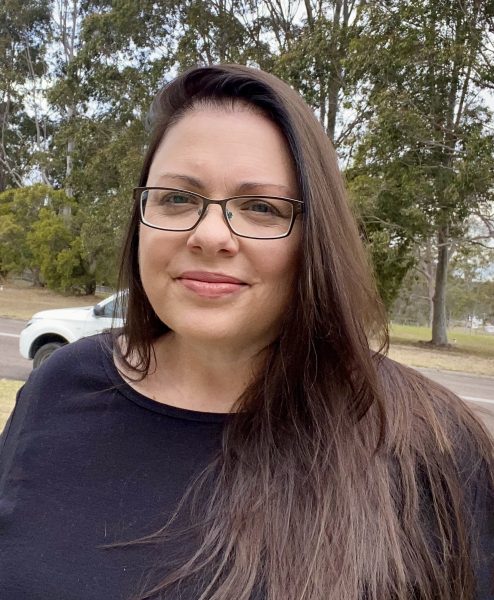
Dr RK (Kath) Crosby is the CEO of research and strategy company KORE CSR, former strategist for the Australian Democrats, and holds a PhD in political behaviour. She is also a well known migraine and health advocate, and the Publisher of New England Times and North Coast Times.
All opinion and comment on New England Times Engage is the opinion of the writer and not New England Times.
Got something on your mind? Go on then, engage. Submit your opinion piece, letter to the editor, or Quick Word now.