
Here’s a blunt truth from the coalface of local journalism: a depressing number of people commenting on news stories haven’t read them.
Not skimmed them. Not misunderstood them. Haven’t read them.
They’re reacting to a photo. A headline. Sometimes not even that—just the general vibe of a topic that has triggered something in them. And then they’re off, firing into the comments with absolute confidence about something they haven’t taken 60 seconds to understand.
If you think that sounds harsh, spend a day moderating a local news Facebook page.
You start to see the patterns. The same accounts posting the same talking points, often wildly disconnected from the story itself. The One Nation bots are the most obvious—copy-paste outrage merchants who latch onto keywords and dump pre-loaded commentary regardless of context. They’re easy to spot.
What’s harder to watch is how many real people pile in behind them, unaware they’re being manipulated and tricked by malicious software.
Agreeing. Arguing. Escalating.
All without reading the story to check whether the original comment has anything to do with reality.
There are some pretty obvious giveaways. Take something as simple as misgendering. We recently ran a straight, factual police report about a woman charged with dangerous driving. The comments? Full of people debating whether “he” should have got bail. Not one, not two—lots of them. It’s not a matter of opinion. It’s a matter of not reading the first paragraph.
Or take a more complex example—one that actually matters to how people understand local industry and investment. A recent story about Boggabilla Coal funding doctors’ housing sparked fierce debate in the comments about how Whitehaven should be forced to pay. The problem? Whitehaven doesn’t operate Boggabilla Coal, Idemetsu does, and the whole story was that they were paying. Again, this isn’t interpretation. It’s basic comprehension that never happened.
Another was a bizarre comment on the story about Armidale’s Thread Shed, a community initiative run by volunteers. The comment? Tax payers shouldn’t be paying for it, government shouldn’t be stepping in where mothers have failed to teach their daughters to sew. Seriously. A comment so far detached from reality – and certainly not prompted by anything in the warm fuzzy good news story – it almost warrants a welfare check.
And that’s the pattern. People arguing passionately about things that simply aren’t in the story.
It would be funny if it wasn’t so corrosive.
Too often, the worst of it is outright racism, bigotry, and abuse—aimed at people or communities based on assumptions that collapse the moment you actually read the article. The harm isn’t hypothetical. It lands on real people, in real communities, who are already dealing with whatever situation made the news in the first place.
At some point, it stops being about free speech and starts being about basic responsibility.
I’m not proud to admit we’ve made editorial decisions because of it. Entire topics effectively off-limits—not because they don’t matter, but because the comment sections became unmanageable cesspits. The rail trail versus trains debate is the clearest example. We’ve polled it multiple times – neither side has anything close to overwhelming support, and most people simply aren’t that interested in the subject. But you wouldn’t know that from the comments, which descend into abuse within minutes. Usually from people rehashing arguments that bear little resemblance to the actual reporting, alleging bias, agendas and misinformation in a story they haven’t read.
So we stopped covering the subject.
That should concern you.
When public conversation is driven not by informed readers but by loud, uninformed reactions and abuse, it distorts reality. It creates the illusion of consensus where none exists, and it drowns out the quieter, more thoughtful voices who actually did the work of understanding the issue.
I used to excuse it as learned behaviour – when you expect news to be paywalled, you don’t bother clicking the link. But New England Times has been providing paywall free news and opinion for over 3 years now, that excuse is no longer standing up. Yes, it’s inconvenient to have the link in the comments, but you’re clearly in the comments, so it shouldn’t be that hard to click the link and read the story.
Right now, we’re heading into a period where that understanding matters more than ever. A state election next year. A federal election not long after—unless the political tea leaves shift sooner (and the redder Barnaby’s face gets the shorter the odds are for a by-election). And with Hanson funded to the gills by Rinehart, and the enormous number of bots and disinformation that money buys, it has never been more important for the New England to be informed… and on guard against the distorting comments.
The stakes are high, the issues complex, and the noise levels only getting worse by the day.
An informed electorate isn’t a nice-to-have. It’s the whole point.
No one is asking you to become an expert on everything. No one expects you to agree with every story you read. Disagree. Criticise. Argue your point. That’s healthy.
But please, do the bare minimum first. It will take you less time that it does to type your angry comment.
Just read the story.
End Rant.
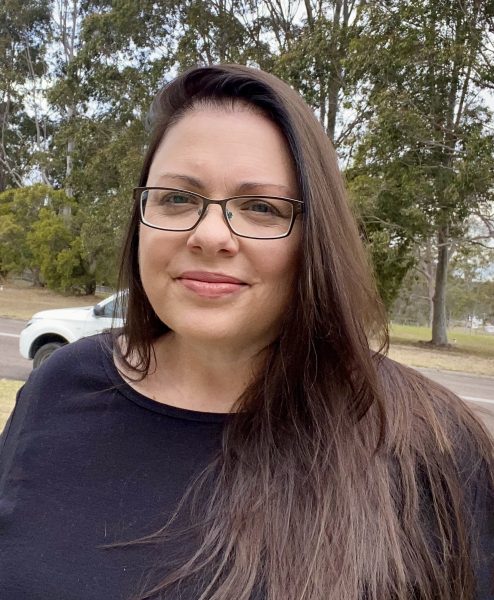
Dr RK (Kath) Crosby is the CEO of research and strategy company KORE CSR, former strategist for the Australian Democrats, and holds a PhD in political behaviour. She is also a well known migraine and health advocate, and the Publisher of New England Times and North Coast Times.
It does indeed concern me that you would feel as though you have to stop all reporting on the ‘great rail trail versus the railway war’. It is of vital interest to the community you provide a service to. Can you not continue to report and stop comments on the articles? You do have that power.
We still have to read all the comments. And the abusive emails and direct messages.
RE: Begin Rant: Read the story. Please.
It is disappointing that NET has dropped the Armidale Regional Council (ARC) proposal to increase rates by pursuing the ”rip-up the rails” to ”build” a rail trail that history shows will be little used among the other ninety (90) rail trails available along the Main Northern Line that is the public transport link to the world.
There are many similar ideas emanating from ARC Councillors and the returned General Manager that fail to meet ratepayer needs. Read the ARC business case for the rail trail ; cannot find it?? Neither can we, possibly because it has not been written by ARC staff, or any other supporters.
Traditionally councils are responsible for ”roads and rubbish” but these tasks appear to have been forgotten at ARC for far too long. Anybody for a ”find a pothole” competition ….. too easy?? Consider the Failes Bicycle Track from the Armidale CBD to UNE. ARC is unwilling or unable to maintain the surface of this about five (5) km 2 metre wide asphalt strip, so how will they maintain, at ratepayer expense, the over forty (40+) kilometres of any rail trail surface??
The article mentions the truism, “it has never been more important for the New England to be informed” that should not avoid the obviously embarrassing conclusion that even my mate Blind Freddie can see that the past thirteen (13) years of representation of New England has seen no improvement in the economic, infrastructure or social development.
Perhaps the embarrassing conclusion is that the ”golden years” of simultaneous representation by Independents in both NSW and federal Parliaments produced considerable improvements in each of these three criteria. However, those years have long passed. Perhaps the hard truth is that today, voting the same ideals as our great grand parents will only deliver the same 19th century future ….. in a 21st century world.
Politics is a participation sport that requires independent media to accurately report proposals from all interest groups rather than just the ruling clique interested in higher political office.
Perhaps it is time for Armidale ratepayers to demand more from ARC than just the political pipedreams of a small coterie of councillors.