
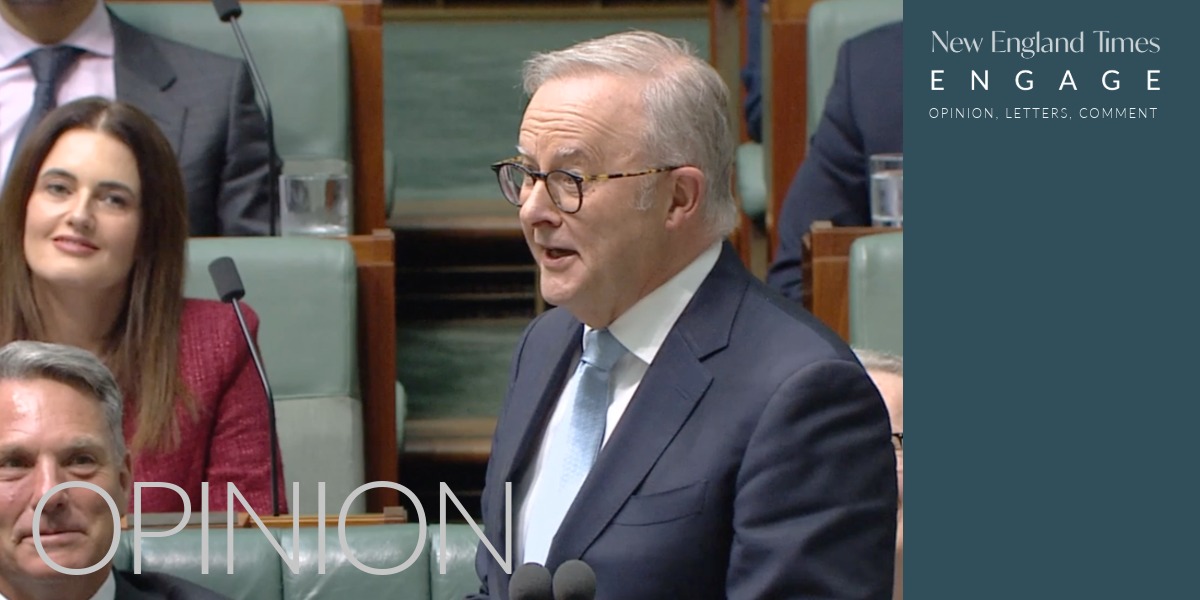
Bob Katter asked the Prime Minister for a report. Anthony Albanese gave him a comedy routine. RK writes that regional people deserve better than a PM who doesn’t get it, and doesn’t care.

New England Times Engage

Posted inLetters
Letter: Affording a home in Tamworth
Labor is supporting people to afford a home in the Tamworth community, where they work, raise their children and have family support. The NSW Labor Government’s approval to rezone vacant government-owned land in East Tamworth is therefore welcome. It opens the way for more than 200 homes, including over 70 social and affordable homes. For […]

Posted inQuick Word
QW: Congrats to the NEGF
Re: Gardening Australia visit to put New England region in national spotlight Congratulations to the hard working New England Garden Festival Committee bringing this year’s third premier event to fruition on 31 October weekend. A special thanks to Armidale Regional Council for their assistance in this matter. These community events bring tourists into Armidale & New […]

Posted inOpinion, Political, Regulars
Denise’s Desk: Barnaby, Pauline and the Battle for the Australian Right
Denise write that while Barnaby discusses Roman emperors and extinct species, and Matt puts on the high-vis, people across New England are dealing with real problems.

Posted inOpinion, Regulars, Social
Begin Rant: Australian men are fundamentally good men
RK writes that in all the handwringing about the manosphere and DV, a simple truth gets lost: the vast majority of Australian men are genuinely good people.
Posted inQuick Word
QW: An excellent result for Moree
Re: $12.7m Moree investment to create jobs, boost agricultural exports An excellent result for the Moree community after too many decades of being ignored by political representatives. This development is an excellent reason for completing the missing about 25km railway link between Moree and Port Newcastle ASAP. This would seriously reduce the cost of freight for […]
Posted inOpinion, Social
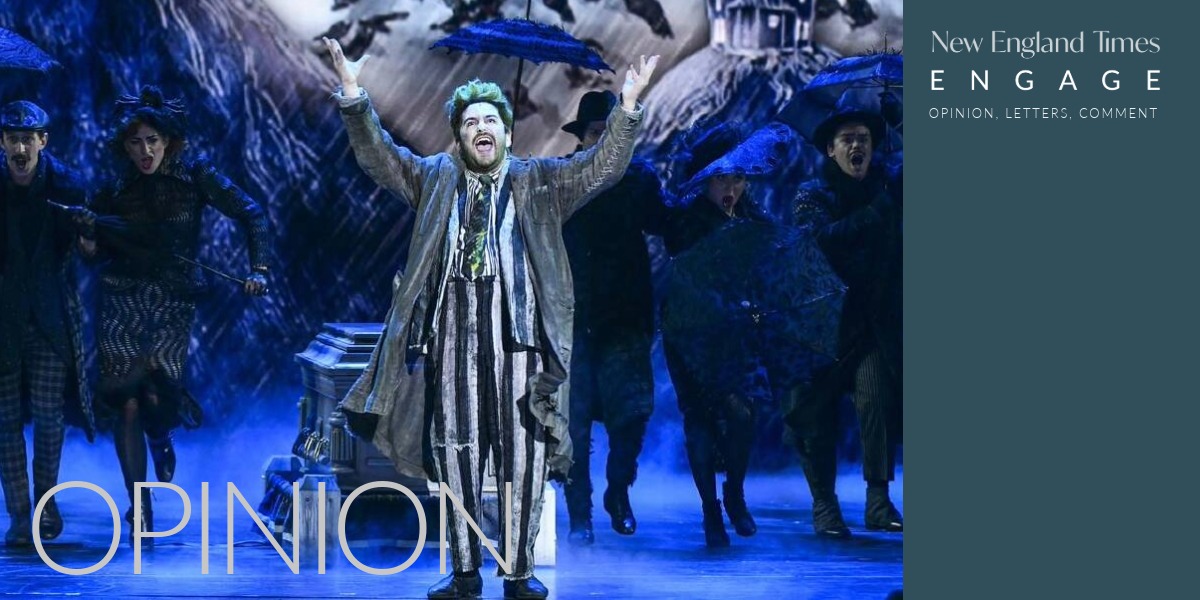
Opinion: why Australians must stand up for the arts
Educator Cathryn Horvat writes that the arts have always shown up for us at weddings and funerals, in ceremony and celebration, in classrooms and theatres, for grief, memory, possibility and hope. Showing up for them now means protecting the teachers, subjects and pathways through which another generation can find what they do not yet know they need.
Posted inQuick Word
QW: Change the school time
I dont like daylight saving, but another option, particularly for school children (& teachers) is to have school start later in the day. Children’s brains aren’t wired (particularly secondary students) for such an early start.

Posted inOpinion, Regulars, Social
Denise’s Desk: Something Doesn’t Quite Add Up
Denise says there is a substantial disconnect between Australia’s economic data and much of the reporting about it.

Posted inOpinion, Political, Regulars, Social
Begin Rant: Mars is the Northern Tablelands, not the North Shore
RK Crosby writes that there is a huge opportunity for data centres in our region, but we shouldn’t wait for state and federal governments or AI companies to realise it.