
Armidale is a town many of us have chosen to live in. But how easy is it to move through it safely and independently in everyday life?
People come here to study, to build a life, and increasingly, to stay. Many families live here across multiple generations, which makes accessibility something that affects not just individuals, but entire households.
For many, it’s also where they choose to age in place, close to healthcare, community and support networks.
That makes accessibility more than a compliance issue. It makes it part of how the town actually functions.
Recently, I spent several months using a mobility scooter. It wasn’t permanent, but it was long enough to change how I experienced Armidale.
What stood out wasn’t buildings. Most places are reasonably accessible once you arrive.
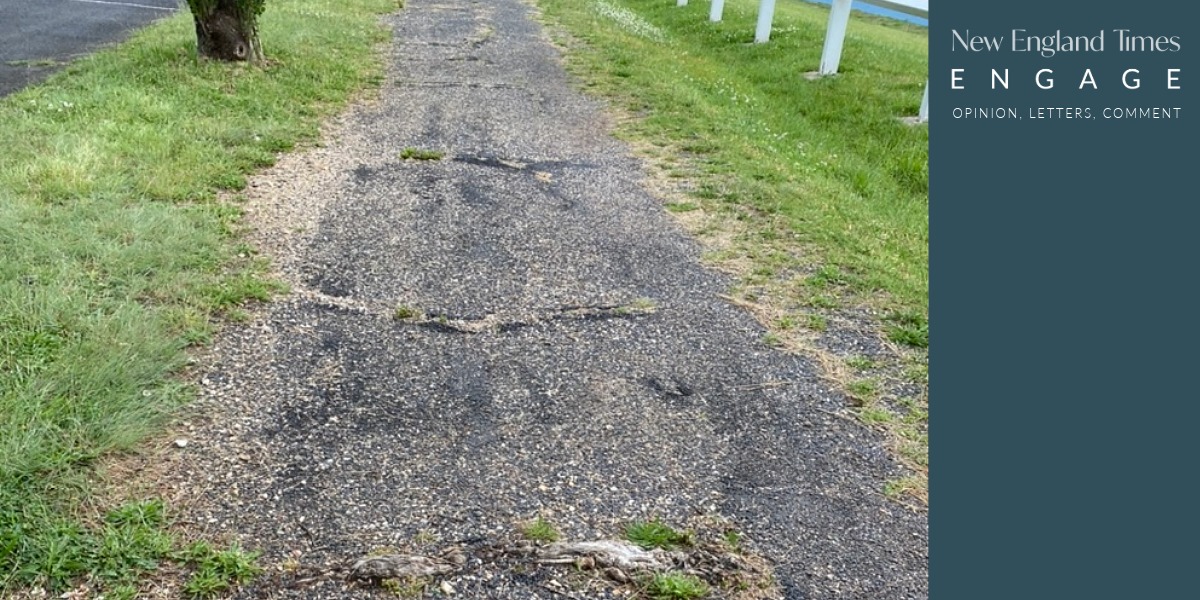
From the outside, it looks like the key elements are in place. But that changed quickly when I found myself on an extremely uneven section of footpath and nearly rolled.
That moment reframes everything. It’s no longer about whether something looks accessible. It’s about whether it is safe and usable in practice.
Accessibility isn’t about how things appear. It’s about whether they work safely in real life.
The challenge, I realised, was getting there safely.
Until I experienced it myself, I would have said Armidale was reasonably accessible. It is not.
I also want to be clear about something. I loved using the scooter.
The fresh air, the independence, the ability to move at my own pace, it gave a real sense of freedom. It’s exactly what accessible infrastructure is meant to support.
The issue wasn’t the device. It was the environment.
That freedom disappears very quickly when a path becomes unsafe or unusable.
The issue isn’t mobility devices. It’s whether the environment allows them to be used safely.
Footpaths that look fine when you’re walking feel very different when you’re seated. A slight lip becomes a barrier. A crack becomes a risk. A kerb that’s slightly off isn’t just inconvenient, it stops you.
On Queen Elizabeth Drive, the most direct route to the university simply wasn’t usable. The footpath shifts sides of the road, the surface is uneven, and you’re required to cross multiple times along a busy corridor. In practice, the only option was a significant detour through town, making use of the bikepath. At one point, overgrown bushes from a front garden blocked the path entirely
On the corner of Marsh and Donnell Streets, the path just ends. No warning. No kerb ramp. The nearest kerb ramp leads to grass that at that time wasn’t maintained. The only real option is then the road.
None of these are unusual on their own. That’s the point.
Individually, they’re small issues. Collectively, they make independent movement difficult, and in some cases unsafe.
A path that is uneven, blocked or incomplete isn’t accessible in practice.
We tend to think about accessibility in terms of features. Is there a ramp? Is there a crossing? Does the building meet standards?
But accessibility doesn’t live in isolated features. It lives in the connections between them.
A path that ends, a ramp that leads nowhere, or a route that requires constant detours isn’t accessible in any meaningful sense.
At the same time, public transport options in Armidale are limited. Bus routes are restricted, frequency is low, and stops often lack seating or shelter. Not everyone can rely on a car.
Which means for many people, footpaths are not just a convenience. They are the transport network.
It’s also not just about ageing.
Armidale is a major education centre. Students, younger people living with disability, and those recovering from injury all rely on being able to move safely and independently.
Accessibility isn’t something that benefits one group. It supports participation across the whole community.
This has broader implications than we might think.
If people can’t move easily through town, they make fewer trips. They skip the coffee. They combine errands, or don’t make them at all. Small decisions, repeated across the community, shape how our town feels and functions.
None of this is about criticism for the sake of it.
Armidale Regional Council has released its Draft Disability Inclusion Action Plan, and it’s a genuine opportunity. The intent is there. The framework is there.
Submissions for Armidale’s Disability Inclusion Action Plan close 22 May. If you’ve had your own experience navigating Armidale, now is a good time to share it while the draft plan is open for feedback.
You can view the draft and contribute here:
https://yoursay.armidale.nsw.gov.au/disability-inclusion-action-plan-2026-2030-draft
Because a well-maintained town centre is of limited value if people can’t reach it safely, and accessibility should be planned based on how people move, not just where they gather.

Ingrid Rothe is a brand strategist and founder of Vivid Thinking, working with regional businesses to bring clarity to their marketing. She focuses on getting the thinking right first, so everything that follows works harder and lasts longer.
Marketing Clarity is Ingrid’s regular column.
All opinion and comment on New England Times Engage is the opinion of the writer and not New England Times.
Got something on your mind? Go on then, engage. Submit your opinion piece, letter to the editor, or Quick Word now.
Leave a comment