

Every year on 3 December, the International Day for People with a Disability (IDPwD) rolls around with the same well-intentioned theme: inclusion. We hear the speeches, read the social media posts, and see the celebrations of diverse abilities and the push for a more accessible world.
But for many of us living with migraine, it is hard not to feel like inclusion doesn’t apply to us, and some disabilities are more equal than others.
There is an uncomfortable truth in the disability community: inclusion often depends on whether the community itself recognises your disability. And migraine, one of the most disabling conditions on the planet, is almost always left out of the conversation.
Why? Partly because of the stubborn “just a headache” stigma. And partly because there are simply too many of us. When one in five Australians lives with migraine, acknowledging us as disabled would dramatically reshape the disability landscape and challenge the validity of the “one in six” statistic routinely quoted for disability prevalence. If one in five people have migraine, but only one in six have a disability, we’re obviously being excluded.
Migraine is ranked as the seventh leading cause of disability worldwide. More than 90 per cent of people with migraine cannot function normally during an attack. The World Health Organization has said that severe migraine attacks are as disabling as quadriplegia. Yet migraine is still routinely dismissed as trivial, temporary, or self-inflicted.
Migraine is not a headache. Nor is it a collection of symptoms that conveniently resolve when the pain fades. It is a genetic disorder that affects sensory processing, making the brain hyper-reactive to ordinary inputs: lights, sound, smells, and even internal bodily signals. These inputs trigger a cascade of chemicals that lead to a migraine attack.
Crucially, migraine is always there. You can only be born with it. The recent shift in medical understanding – the debunking of the old vascular theory and the recognition of migraine as a complex sensory processing disorder – has been revolutionary for patients. But we are still decades away from early-intervention programs or childhood screening that could prevent some people from developing attacks at all, and there is almost no funding for migraine research.
Migraine is a variable or dynamic disability. Some days, a person with migraine may appear completely fine. Other days, they cannot stand upright, tolerate light, feed themselves, work, or even leave bed. Like Autism, migraine is a spectrum disorder: some people are only mildly impacted, while others live with profound, sometimes dangerous symptoms.
Many live in a constant state of adaptation: carefully controlling their environment, monitoring food and sensory exposure, and managing the anxiety that comes from never knowing what might trigger an attack. Between attacks is where the condition becomes most invisible, and often most disabling. According to the American Migraine Foundation, 60 per cent of people with migraine live with clinical anxiety, and 25 per cent experience depression.
Migraine meets every definition of disability. It is permanent, it is impairing, and for many it severely limits the ability to participate fully in work, education, and community life.
Four migraine sub-types, in particular, are significantly disabling regardless of attack frequency.
Migraine with brainstem aura can cause vision and speech impairment, loss of consciousness, and in severe attacks even coma.
Hemiplegic migraine can mimic stroke, cause paralysis, and require rehabilitation.
Vestibular migraine brings vertigo so severe many people become housebound or bedbound.
Abdominal migraine, particularly common in children, causes acute gastrointestinal distress that makes continuing any activity impossible.
These presentations alone should put to rest any idea that migraine cannot be disabling.
And yet the system refuses to see us.
About 15,000 Australians with migraine receive the Disability Support Pension – an extraordinarily small number given the prevalence and severity of the condition, and the vast majority of applicants for DSP are rejected.
Almost none receive NDIS support. When the scheme was introduced, many people with migraine were rejected on the grounds that migraine was “not permanent”, despite its genetic basis and the lifelong reality of managing attacks. I was repeatedly denied the NDIS myself, despite having severe hemiplegic and brainstem migraine, and despite relying on state-provided Home Care just to get out of bed and eat at the time.
This is what exclusion looks like: a genetic, incurable, disabling condition that is widely misunderstood, under-researched, and stripped of legitimacy because acknowledging the full scale of disability in migraine would force a reckoning with how we define disability itself.
On the International Day for People with a Disability, inclusion must mean inclusion for all – even when the disability is invisible, misunderstood, or statistically inconvenient.
Recognising migraine as a disability is not about labelling people or limiting them. It is about ensuring that those who are significantly impaired by migraine receive the support, accommodations, and dignity that every disabled person deserves.
If inclusion is the goal, migraine cannot remain invisible. Only when we acknowledge the full spectrum of disability – including variable and dynamic conditions like migraine – will inclusion truly mean what it claims to.
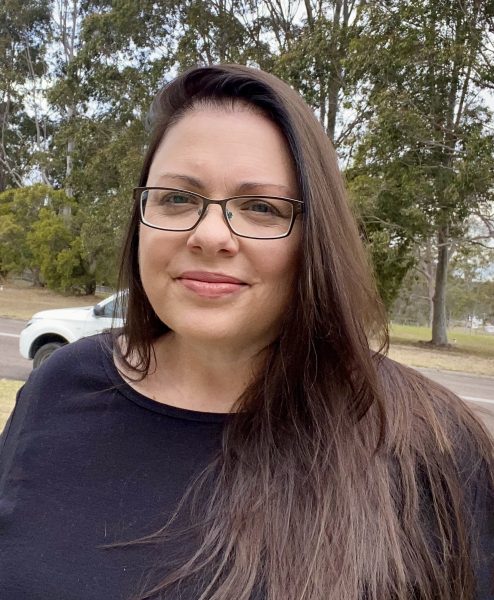
Dr RK (Kath) Crosby is the CEO of research and strategy company KORE CSR, former strategist for the Australian Democrats, and holds a PhD in political behaviour. She is also a well known migraine and health advocate, and the Publisher of New England Times and North Coast Times.
All opinion and comment on New England Times Engage is the opinion of the writer and not New England Times.
Got something on your mind? Go on then, engage. Submit your opinion piece, letter to the editor, or Quick Word now.