
There are moments in politics when you wonder whether the person speaking has forgotten their own history. Or perhaps they hope the rest of us have.
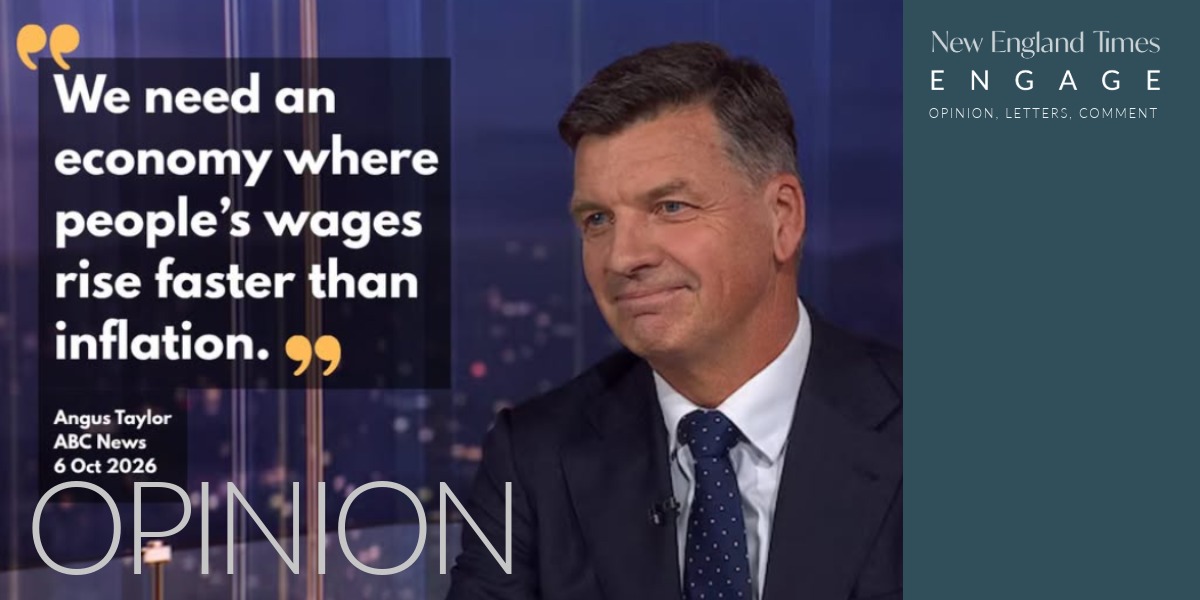
Federal Opposition Leader Angus Taylor declared on ABC’s 7.30 on 6 October that Australia needed an economy where wages rise faster than inflation.
Well, there’s a revelation. Workers should be able to afford more with their pay packets, rather than watching their purchasing power disappear at the supermarket.
It’s difficult to disagree. What is harder to swallow is hearing it from the leader of a party that spent nine years in federal government presiding over weak wage growth.
Here in NSW, another 12 years of Liberal-National government made holding down public sector wages deliberate policy.
Perhaps Mr Taylor could explain when the Coalition discovered that workers having more money was a good thing.
In 2019, then federal Finance Minister Mathias Cormann defended wage restraint as a deliberate feature of Australia’s economic arrangements. Workers were told economic growth and business profitability would eventually improve living standards. Too many kept working harder without seeing the rewards.
As someone who spent years in education, I remember the frustration. Teachers faced increasingly complex classrooms, administrative demands and mounting workloads, while their wages were treated as a budget problem.
During Nationals Education Minister Sarah Mitchell’s tenure, NSW recorded 1,854 teacher resignations in 2022, with vacancies climbing above 3,300. Yet the government continued defending its wages cap.
Since taking office, the Minns Government has increased teachers’ salaries, converted more than 25,000 temporary teachers and school support staff to permanent positions and introduced workload measures. Teacher vacancies have fallen to a 12-year low.
There is more to do, particularly regionally. But these are measurable changes.
Labor also abolished the public sector wages cap in 2023. Federally, the Albanese Government has supported minimum wage increases and reforms intended to strengthen collective bargaining.
None of this magically restores lost purchasing power. Labor deserves scrutiny too. Workers should expect continuing improvements while household budgets remain under pressure.
Decent wages also matter beyond individual households. In Tamworth, teachers, nurses and other workers spend their pay in local businesses. A prosperous regional economy needs successful businesses and customers who can afford to support them.
Which brings us to next March’s NSW election. Can workers trust the parties seeking government to protect their wages and conditions?
The Coalition maintained public sector wage restrictions for more than a decade, including the longstanding 2.5 per cent cap. It should explain what has changed and whether it would rule out similar restrictions.
Then there is One Nation.
Its NSW representatives cannot reasonably expect voters to ignore the party’s federal record. One Nation opposed the same job, same pay labour hire reforms and supported casual employment changes that unions opposed over employment security and entitlements.
Pauline Hanson initially supported Sunday penalty rate cuts in 2017 before reversing her position following public backlash. Her shifting positions on paid parental leave raise further questions about which commitments workers could trust.
Politicians can change their minds. But workers deserve to know whether those changes reflect conviction or political pressure, particularly if One Nation holds the balance of power.
Its NSW candidates should explain their positions on job security, labour hire and workplace protections. If they propose public sector savings, where would those savings come from: staffing, wages, conditions or essential services?
Regional hospitals and schools already struggle to attract skilled workers. Wage decisions affect whole communities.
Small businesses deserve workable employment laws, but fair conditions and successful businesses should be shared goals for any state government seeking office.
Past decisions need not determine future policy. Labor’s redesign of the Stage 3 tax cuts broke an election promise, but could be defended on fairness grounds. The obligation was to explain the change and accept scrutiny.
Every party seeking government should answer straightforward questions before polling day. What happens to public sector wages? How will staffing shortages be addressed? What workplace protections will remain?
After years of being told wage restraint was good for the economy, workers deserve clear answers about their futures and their families’ security.
If politicians promise to protect our wages and conditions, what in their record gives us reason to trust them?

Denise McHugh is an experienced educator in Tamworth. She is Chair of the NSW ALP Education and Skills Committee and Deputy President of the Independent Education Union (IEU).
All opinion and comment on New England Times Engage is the opinion of the writer and not New England Times.
Got something on your mind? Go on then, engage. Submit your opinion piece, letter to the editor, or Quick Word now.