
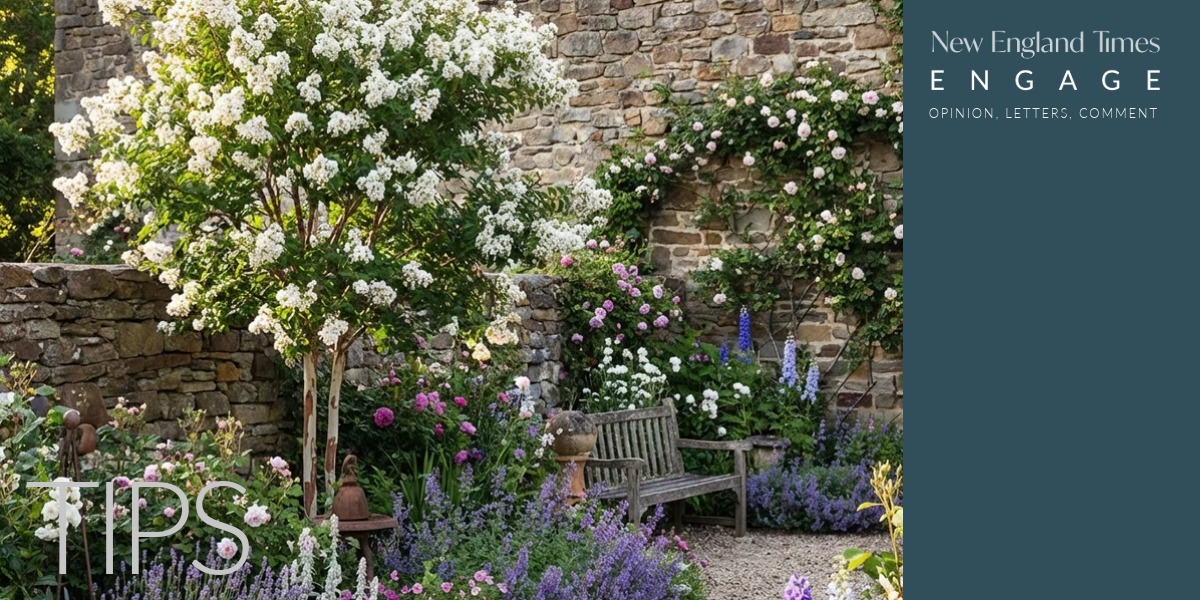
Spring arrives late on the tablelands and leaves early. Armidale sits close to 1,000 metres, Guyra and Ben Lomond higher again, and the region takes hard frosts from April to October, late frosts into November, the occasional snowfall and then a hot, dry summer. Most gardening advice is written for the coast and does not survive any of that. These are the tips that do.
Wait for the last frost before anything tender goes in. September sun does not mean the danger has passed, and one clear, still night can take a young tomato or dahlia well into November. The old rule of waiting for Melbourne Cup day is about right at Armidale and still a touch early at Guyra.
Plant the hardy things now. Frost hardy natives and deciduous trees planted now get a full growing season to settle before their first real winter, and a deciduous tree planted before it leafs out has little above ground for a late frost to burn.
Treat autumn as the other window. When we looked at a year of our own orders, 3,165 orders and 20,604 plants over twelve months, April beat every month of spring as the biggest planting month. In March and April the soil is still warm, the air is cooling, and a hardy plant can get its roots down before the frosts arrive. Hardy plants only, though. Nothing tender goes in during autumn up here.
Find out where the cold pools. Frost settles in the low ground, so the creek flat or the lowest corner of the block will be several degrees colder than the slope above it on a still night. Put the toughest plants there, the snow gums and New England peppermints that grow naturally on cold flats, and keep anything borderline higher up or on the northern side of the house.
Work with the soil you have. The granite country around Armidale, Uralla and Tenterfield is light, acid and quick draining, which most natives like, and needs compost to hold water through summer. The basalt country at Guyra, Glen Innes, Walcha and Inverell is heavy, dark and fertile but drains slowly, so plant on a slight mound and be wary of Western Australian natives that hate wet feet.
Mulch, and keep it off the stem. A layer around 50 millimetres deep protects the roots from freezing and thawing and holds moisture into summer, which up here matters as much as the frost.
Stop feeding by late summer. Fertiliser pushes soft new growth, and soft growth is the first thing a frost blackens. Feed in spring if a plant needs it, then let everything harden from February on.
Cover young plants for their first two winters. Frost cloth, hessian or an old sheet over a young shrub on a clear, still evening is usually all it takes, and once a plant has some size and woody growth it can fend for itself. Take the cover off in the morning.
Choose natives from cold country, not the coast. Natives made up about 49 per cent of the plants we sent to New South Wales (61 per cent in Victoria), and the ones that belong on the tablelands already grow there or somewhere equally cold: snow gum and New England peppermint, Banksia marginata, the correas, tea trees, kunzeas including the local violet kunzea, lomandra, dianella and native tussock grasses such as Poa.
Give deciduous trees the chill they want. Maples, ornamental pears, crab apples, magnolias and crepe myrtles do better on the tablelands than on the coast because they get a proper winter. Japanese maples need shelter from hot westerly winds, deciduous magnolias can lose early flowers to a late frost, and crepe myrtles want a hot summer to flower well, so they suit Inverell and Armidale better than Guyra.
Hedge with plants that were bred for cold. Photinia, Viburnum tinus, English box and Japanese box all take a New England winter without complaint. Camellia sasanqua hedges well too, but give it morning shade so a frosted bud thaws slowly rather than in the first sun.
Leave the coastal favourites at the coast. The big flowered grevilleas bred from northern species, kangaroo paw, most lilly pillies once a hard frost arrives, frangipani and the glossy Hawaiian hibiscus all come to grief up here, usually in their first July. The small leaved cold country grevilleas such as Grevillea victoriae are a different matter.
Keep it simple. Low maintenance was the top quality asked for in every state in our study, and up here the low maintenance plant and the frost hardy plant are usually the same plant: something from cold country, put in the right spot at the right time and left alone.
Isaac Olson is a director of Nursery Near Me, an Australian online nursery that delivers to New South Wales with no minimum order.
Frost guide: nurserynearme.com.au/blogs/blog/frost-tolerant-plants-in-australia.
Planting study: nurserynearme.com.au/blogs/blog/what-australia-planted-2025-26.
All opinion and comment on New England Times Engage is the opinion of the writer and not New England Times.
Got something on your mind? Go on then, engage. Submit your opinion piece, letter to the editor, or Quick Word now.