
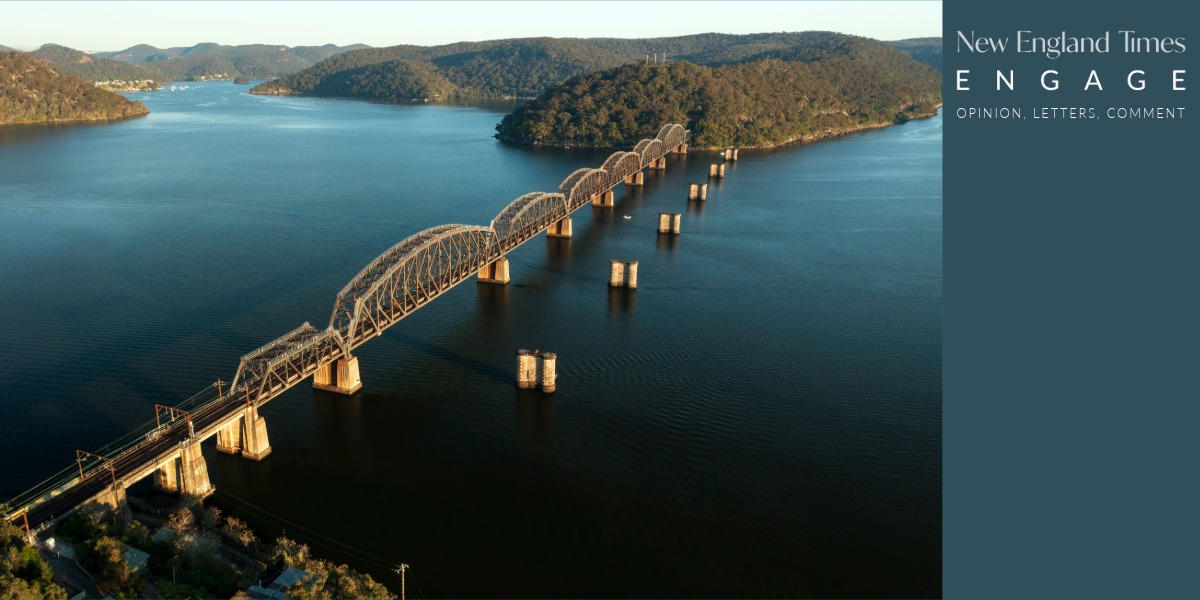
Recent mainstream media reports have highlighted the staggering estimated cost of a proposed fast rail link between Sydney and Newcastle — reportedly approaching $90 billion. This is more than double the earlier estimate of 40 billion. The scale of the proposal is immense, involving more than 130 kilometres of tunnelling, including complex engineering works through the Hawkesbury River basin.
This raises a fundamental question: is this the most strategic use of taxpayer funds?
The Sydney–Newcastle Fast Rail Question
The corridor between Sydney and Newcastle, including the Central Coast, is already one of the most densely populated and rapidly growing regions in New South Wales. Housing prices have escalated significantly over the past decade, and infrastructure — from roads to schools to health services — is under sustained pressure.
Constructing a high-speed rail line in this corridor is likely to intensify those pressures. Improved commuting times would make the Central Coast even more attractive to Sydney-based workers seeking lifestyle advantages, driving further population growth and pushing housing affordability even further out of reach for local residents.
Rather than easing congestion and cost-of-living pressures, such a project risks compounding them.
It is also worth noting that an electrified heavy rail line already exists between Sydney and Newcastle, operated by NSW TrainLink and Sydney Trains. Services already operate at high frequency, and incremental upgrades — including signalling improvements and track enhancements — could significantly increase capacity at a fraction of the cost of a new tunnelled high-speed alignment.
If services ran every 15 minutes instead of every 30 minutes, would that not achieve meaningful improvements without a $90 billion price tag?
An Alternative Vision: Regional Fast Rail
For a similar level of investment, Australia could deliver something transformative: a fast rail corridor between Sydney and Brisbane via regional New South Wales and regional Queensland.
Such a corridor would unlock the economic potential of inland towns seeking population growth, business investment, and skilled professionals. It would offer:
Affordable housing options
Open space and lifestyle advantages
Lower land costs
Opportunities for decentralised industry
Rather than concentrating growth along an already pressured coastal strip, a regional fast rail strategy would distribute growth more evenly and strategically.
It would align with long-standing national conversations about regional development, resilience, and population decentralisation.
The Escalating Cost of Mega-Projects
Governments are rarely drawn to modest infrastructure solutions. Large, complex, high-profile projects often attract extensive consultancy, engineering, and international construction involvement. While expertise is essential, history shows that mega-project cost estimates frequently escalate dramatically over time.
The most prominent example is Inland Rail. Originally estimated at approximately $8 billion, the projected cost has now risen to around $32 billion. Scope changes, engineering challenges, land acquisition issues, and governance complications have all contributed to the escalation.
Cost blowouts on this scale place enormous strain on public finances and raise legitimate concerns about project planning, route selection, and long-term value for money.
A Missed Opportunity in Route Selection?
One of the most contentious elements of Inland Rail has been route selection.
Why was greater consideration not given to alignment via the New England region, where an existing — though currently underutilised — rail corridor already exists?
The Great Northern Railway corridor through New England presents a potential opportunity to:
Reduce new land acquisition
Minimise tunnelling and major earthworks
Lower overall project costs
Deliver regional economic uplift
Redirecting or integrating Inland Rail through such existing corridors could save billions of dollars while stimulating regional growth across communities that actively seek investment and population expansion.
Strategic Planning vs. Political Momentum
Between Sydney and Newcastle, there is already substantial rail infrastructure. Along the inland regional corridors, by contrast, there are communities eager for connectivity, investment, and long-term economic stimulus.
The policy question is not whether Australia should invest in rail. It absolutely should — particularly as part of national decarbonisation and freight modal-shift strategies.
The question is whether we are investing in the right corridors.
Are we reinforcing congestion and high land costs in already pressured coastal regions? Or are we unlocking the productive capacity of inland Australia?
With billions of taxpayer dollars at stake, strategic infrastructure planning must prioritise long-term national benefit over short-term political visibility.
Fast rail and Inland Rail should be nation-building projects. The opportunity remains to ensure they truly are.
Got something on your mind? Go on then, engage. Submit your opinion piece, letter to the editor, or Quick Word now.