

There is something about Ben Chifley’s “Light on the Hill” that has survived long after most political speeches have disappeared into history. Perhaps it is because Chifley wasn’t really talking about politics at all. He was talking about purpose.
Speaking at the annual Light on the Hill dinner in Bathurst on Saturday night, NSW Deputy Premier Prue Car returned to that question: what is government actually for? It is a question worth asking at a time when politics increasingly seems to be about outrage, grievance, personalities and winning the daily argument on social media.
Car’s answer was refreshingly old-fashioned. Government should make people’s lives better. She spoke about Chifley’s belief that Labor existed not simply to win elections or put particular people into high office, but to improve the circumstances of ordinary people. And she brought that idea back to something remarkably simple: a child walking through the gates of a school somewhere in NSW.
We don’t know that child’s name. We don’t know what their parents earn, where they live or what advantages or disadvantages they were born into. And we certainly don’t know what that child might become. But we can decide something important about their future: whether the circumstances of their birth determine the opportunities available to them.
As someone who spent much of my working life in education, that part of Car’s speech resonated strongly with me. Teachers see inequality walk through the classroom door every morning. Children do not arrive at school as blank slates. Some arrive having been read to every night, surrounded by books and conversation and opportunity. Others arrive already behind through absolutely no fault of their own.
That is why Car’s emphasis on early childhood education matters. The NSW Government is building 100 new public preschools, 49 in Western Sydney and 51 in regional NSW, deliberately concentrating them in communities where access has been poorest. Car made the point that quality early education isn’t simply childcare. Done properly, it can change the trajectory of a child’s life.
That is government doing something markets alone will never reliably do: deliberately directing opportunity towards people who otherwise might miss out. The same principle applies to public services.
For years we were told that holding down the wages of teachers, nurses, paramedics and other public servants was responsible economic management. Eventually reality intervened. You cannot run schools without teachers, hospitals without nurses or communities without the people who provide essential services.
Car pointed to teacher vacancies having fallen by more than 70 per cent since Labor came to government and the number of merged and cancelled classes being halved. Those aren’t particularly glamorous political achievements. You won’t see many shouting matches about them on breakfast television. But ask a child who has a teacher in front of their class instead of another collapsed lesson whether it matters.
There was another part of the speech that deserves attention in regional NSW. Car talked about bringing train manufacturing back to the Hunter and protecting the future of Tomago Aluminium. Her argument was that governments don’t merely sit back and watch economies happen. Their decisions help determine which industries survive, where jobs are created and whether young people can build a future in the communities where they grew up.
That matters enormously outside Sydney. For too long regional communities have been expected to accept the disappearance of jobs, services and opportunities as some unavoidable consequence of economic change. The bank closes. The government office disappears. Manufacturing moves overseas. Young people leave because the jobs aren’t there. Then everyone wonders why regional communities feel neglected.
Government cannot prevent every economic change, nor should it try. But neither should it shrug its shoulders and pretend it has no role. And that brings us back to Chifley.
The most powerful idea in Car’s speech wasn’t really a policy announcement. It was the reminder that political choices have human consequences. Behind an education budget is a child. Behind health spending is a patient. Behind public-sector wages is a teacher, nurse, police officer or paramedic. Behind an industry policy is a worker wondering whether there will still be a job next year. It is easy for politics to turn all of those people into numbers. Chifley’s genius was to make politics human.
Shortly before the 1949 election he told his Labor colleagues that when they reached the end of their lives they should be able to say the world was a little better because they had lived. That is an extraordinarily demanding standard for politics. Not whether you won the argument, whether your side got another term, or even whether you became Prime Minister, Premier or minister. The question is much simpler: did you leave things better?
Car finished her speech with essentially the same test: does what government does bring “something better to the people”?
Every government, Labor included, deserves to be judged against that standard. Governments will get things wrong. They will disappoint people. They will make compromises that frustrate their own supporters. And no political party should ever become so convinced of its own virtue that it stops listening. But there is something reassuring about hearing a senior politician articulate a purpose for government beyond winning the next election.
Because the Light on the Hill was never really about Labor itself. It was about the belief that politics can be used to give an ordinary child a better start, an ordinary worker greater security and an ordinary family greater confidence in the future.
Nearly eighty years after Chifley spoke those words, that remains a pretty good reason to be involved in politics.
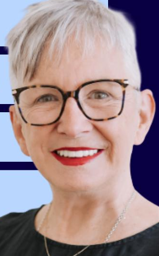
Denise McHugh is an experienced educator in Tamworth. She is Chair of the NSW ALP Education and Skills Committee and Deputy President of the Independent Education Union (IEU).
All opinion and comment on New England Times Engage is the opinion of the writer and not New England Times.
Got something on your mind? Go on then, engage. Submit your opinion piece, letter to the editor, or Quick Word now.